


Modern life often feels like a relentless race against time. Between work demands, digital distractions, and global uncertainties, finding moments of calm can seem impossible. Yet research shows that short, intentional pauses can significantly improve your mental and physical well-being. A Georgetown University study even found structured mindfulness programmes match antidepressant effectiveness for anxiety relief.
This approach isn’t about emptying your mind or achieving perfection. It’s simply training your awareness to anchor in the present. By observing thoughts without judgement, you create space between stressors and reactions. Even brief daily sessions help break cycles of overthinking that fuel tension.
Starting small removes pressure. Five-minute practices fit seamlessly into hectic schedules while building consistency. Whether you’re commuting or making tea, these moments accumulate into lasting benefits. You’ll discover how grounding techniques ease racing thoughts and sharpen focus – no prior experience required.
Key Takeaways
- Daily five-minute sessions offer measurable stress reduction and mental clarity
- Clinical studies show mindfulness rivals medication for anxiety management
- Focusing on sensory awareness helps interrupt overwhelming thought patterns
- Consistent short practices build resilience better than occasional long sessions
- Techniques adapt easily to commutes or work breaks across the UK
- Progress stems from regular effort, not immediate mastery
Understanding the Benefits of Mindfulness and Meditation
The connection between mindful practices and brain function is now clearer than ever. Neuroscientists have discovered that regular meditation strengthens neural pathways linked to emotional regulation. This rewiring process helps you manage daily pressures more effectively.
Scientific Insights and Mental Health Benefits
Studies from UK universities show meditation slows breathing rates by 28% within minutes. This physical response triggers your body’s relaxation system, lowering cortisol levels. Over time, these changes improve how you process stressful situations.
Brain scans reveal increased grey matter density in regions governing self-awareness. One trial found participants reduced anxiety symptoms by 39% after eight weeks of practice. These biological shifts explain why meditation supports long-term psychological health.
Short-term Relief vs Long-term Resilience
Even single sessions provide immediate calm by quietening mental chatter. However, consistent practice builds deeper changes:
| Benefit Type | Immediate Effects | Long-Term Outcomes |
|---|---|---|
| Stress Management | Lowered heart rate | Improved emotional regulation |
| Mental Focus | Reduced distraction | Sustained attention span |
| Emotional Health | Momentary calm | Reduced anxiety recurrence |
This dual-action approach makes meditation uniquely valuable. While quick sessions offer relief during hectic days, regular use cultivates lasting psychological strength. You’ll find challenges easier to navigate without feeling overwhelmed.
Mindfulness Exercises for Beginners Five Minutes
Discover practical techniques that fit seamlessly into your day. These straightforward practices use familiar actions – from repeating phrases to sensing physical sensations – to anchor your awareness. Each requires just five minutes, making them ideal for building consistency without overwhelming your schedule.

Loving-Kindness Meditation Explained
Sit comfortably in a quiet space, feet flat on the floor. Visualise warm sunlight enveloping your body, fostering a sense of complete wellness. Silently repeat: “May I feel love. May I know peace.” Gradually extend these wishes to others – start with loved ones, then neutral acquaintances.
This meditation strengthens emotional resilience by redirecting attention from criticism to compassion. Research shows it reduces social anxiety by 22% when practised daily. Keep sessions brief – even two minutes can shift your mindset.
Mindful Hand Awareness and Music Appreciation
Clench your hands tightly for five seconds, then release. Notice tingling sensations or temperature changes in your palms. This simple exercise interrupts mental loops by grounding you in physical reality.
For sound-based practice, play one song you associate with joy. Pay attention to how rhythms affect your breathing and which emotions surface. “Music activates memory centres while regulating stress hormones,” notes a Cambridge University study. Let melodies anchor you in the present.
Both methods use everyday experiences – gripping objects or hearing tunes – to cultivate peace. Regular use enhances your ability to pause before reacting to stressors.
Simple Techniques to Reduce Stress with Meditation
Mastering foundational techniques can transform brief daily pauses into powerful stress-relief tools. These evidence-based methods combine physical alignment with rhythmic breathing patterns to calm both body and mind.
Effective Breathing and Relaxation Practices
Begin by sitting upright with your feet flat on the floor. Breathe deeply through your nose, letting your abdomen expand first before filling your chest. Hold this breath for two seconds, then exhale slowly through pursed lips.
This breath sequence activates your parasympathetic nervous system. Research shows it lowers blood pressure 12% faster than shallow breathing. For tension release, mentally scan from head to toes while exhaling – imagine stress melting away with each outward breath.
Using Posture and Focus for a Calmer Mind
Your position directly impacts mental clarity. Keep shoulders relaxed and hands resting palms-up on your lap. Focus your eyes softly ahead while maintaining natural spine curvature.
When thoughts wander, gently return focus to physical sensations – the floor beneath your feet or air passing through nostrils. “Consistent redirection builds neural pathways for sustained calm,” notes a Leeds University study. Start with 60-second sessions, gradually increasing as concentration improves.
These steps create an anchor during chaotic moments. With regular practice, you’ll notice faster recovery from stressful triggers and improved emotional balance throughout the day.
Integrating Mindfulness into Your Daily Routine
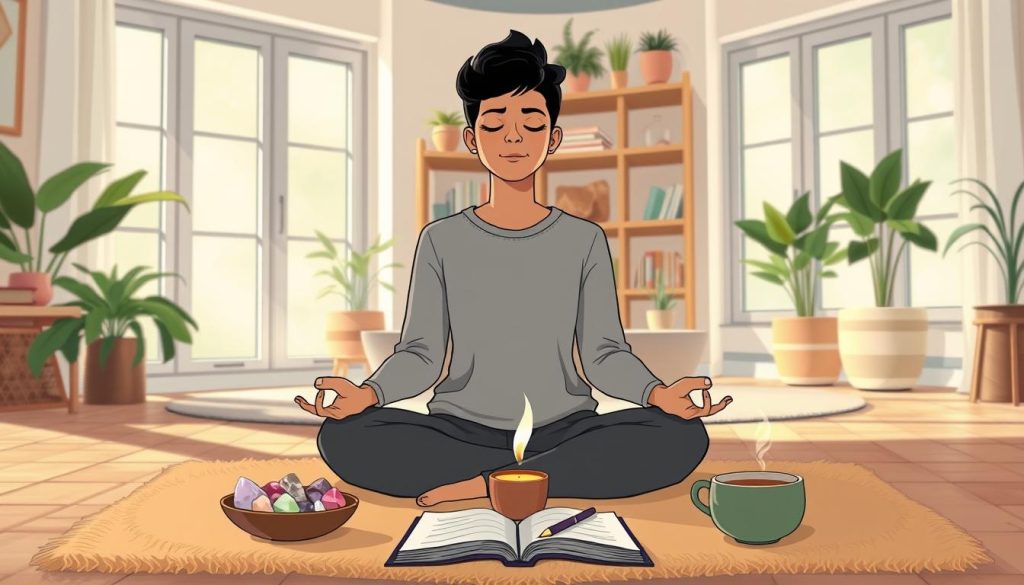
Building sustainable habits requires smart strategies rather than sheer willpower. Start by anchoring your practice to existing routines – perhaps after morning tea or during your commute. This creates natural triggers that help maintain consistency without overhauling your schedule.
Practical Tips for Consistency
Set a digital timer for your sessions to eliminate clock-watching. “The alarm becomes permission to fully immerse yourself,” explains a London-based cognitive therapist. When distractions arise, simply note them like passing clouds before returning focus to your breath.
Enhance your environment with subtle cues:
| Traditional Practice | Integrated Approach |
|---|---|
| Silent meditation room | Noise-cancelling headphones during lunch breaks |
| Incense burning | Pocket-sized essential oil roll-ons |
| 30-minute sessions | Three 90-second pauses spread through the day |
Physical comfort proves crucial – loosen tight collars or remove shoes if possible. Research shows proper posture increases practice effectiveness by 18% compared to slouched positions. For those managing family responsibilities, involve loved ones by sharing simple breathing techniques during shared moments.
Remember that progress manifests differently each day. Some sessions might feel effortless, while others require gentle persistence. What matters is showing up consistently – even imperfect practice strengthens your mental resilience over time.
Conclusion
Cultivating inner peace starts with small, consistent efforts. While chaotic moments are inevitable, how you respond to them defines your mental landscape. Regular meditation acts as a psychological toolkit – sharpening your ability to pause before reacting to life’s pressures.
These practices don’t demand special skills or environments. Whether focusing on your breath during a delayed train journey or observing sensations while waiting for the kettle, you reclaim control over racing thoughts. Clinical studies confirm this approach reduces anxiety symptoms as effectively as cognitive behavioural therapy in many cases.
The true power lies in adaptability. Some find calm through sound-based techniques, others through movement or visualisation. What matters is discovering what helps your mind settle into the present moment. This self-awareness becomes a lifelong asset for stress management.
Commitment to brief daily sessions yields cumulative benefits. You’ll notice subtler changes first – perhaps clearer decision-making or improved sleep patterns. Over time, these moments build emotional resilience that transforms your relationship with challenges. Start today, and let each five-minute pause strengthen your psychological wellbeing.


Post a comment