


Many people experience overwhelming worries that disrupt daily life. Cognitive Behavioural Therapy (CBT) provides a practical framework to address these challenges by examining how thoughts, feelings, and actions intertwine. This approach prioritises present-day solutions over prolonged analysis of past experiences, making it particularly suitable for those seeking tangible strategies.
At its heart, CBT operates on a simple truth: our interpretations shape our realities. Persistent negative thinking often fuels emotional distress, which then influences unhelpful behaviours. By identifying and adjusting these patterns, individuals can disrupt cycles of unease. Studies show this method significantly reduces symptoms for various anxiety-related concerns.
While professional guidance enhances progress, many foundational practices are accessible for independent use. Most people notice improvements within weeks when applying techniques consistently. However, results vary depending on individual circumstances and commitment levels.
This structured form of therapy equips users with lifelong skills rather than temporary fixes. Its evidence-backed nature has made it a cornerstone of modern mental health support, offering clarity amidst life’s complexities.
Key Takeaways
- Thoughts, emotions, and behaviours form interconnected cycles influencing anxiety experiences
- Structured methods focus on current challenges rather than historical analysis
- Adjusting thought patterns can disrupt negative emotional and behavioural loops
- Evidence supports its effectiveness across various anxiety-related concerns
- Visible progress typically emerges within weeks of consistent application
- Self-guided practice proves possible, though specialists amplify outcomes
Overview of Cognitive Behavioural Therapy in Anxiety Management
Addressing persistent worries requires tools that create real change. Cognitive behavioural therapy offers a structured path to untangle the web of unhelpful patterns influencing emotional struggles. This method prioritises measurable progress through collaborative effort, blending psychological insights with actionable steps.
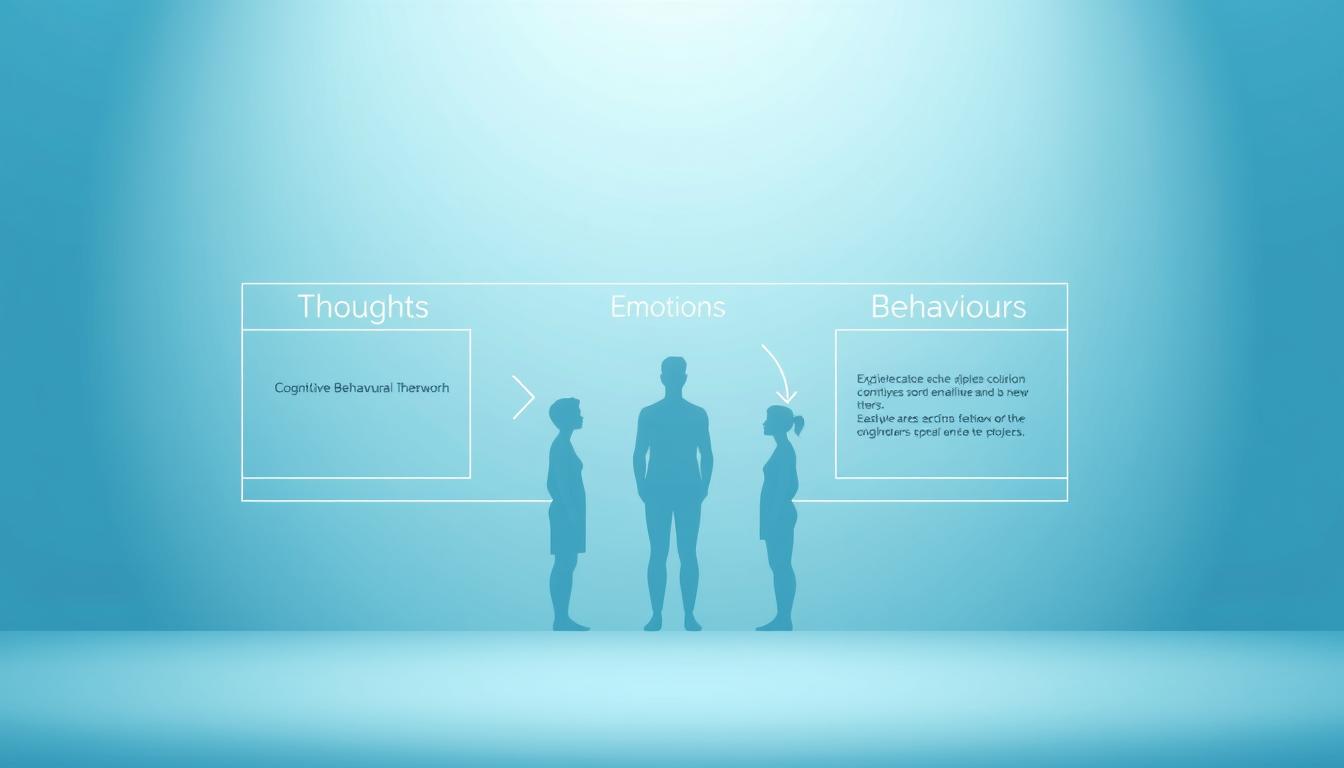
How CBT Addresses the Connection Between Thoughts, Emotions, and Behaviours
Our mental processes operate like interconnected gears. Anxious predictions spark physical tension, which often leads to withdrawal from challenging situations. This avoidance then feeds back into heightened worry, creating self-perpetuating cycles.
Psychiatrist Aaron Beck’s research revealed how adjusting interpretations of events can reshape emotional responses. For example, viewing a racing heartbeat as excitement rather than danger reduces panic. Practical exercises help individuals test assumptions and develop balanced perspectives.
| Aspect | CBT Approach | Traditional Therapy |
|---|---|---|
| Focus | Current challenges & solutions | Historical analysis |
| Duration | 6-20 sessions | Open-ended |
| Effectiveness (Anxiety) | 70%-80% improvement | 30% improvement |
Benefits of a Short-Term, Goal-Oriented Approach
Therapy sessions typically follow a SMART framework, establishing clear targets like “Reduce panic attacks from daily to weekly within two months”. This structure prevents vague aspirations, focusing energy on achievable milestones.
Weekly one-hour meetings maintain momentum while allowing time for real-world practice. Unlike open-ended approaches, 83% of users report noticeable changes within 12 weeks. The emphasis on skill-building creates lasting resilience rather than dependency on treatment.
Identifying Unproductive Thought Patterns and Cognitive Distortions
Our minds often create narratives that feel true but lack factual basis. Learning to spot these mental shortcuts helps break cycles of unease. Many emotional challenges stem from habitual negative thought patterns operating beneath conscious awareness.

Recognising Negative Thought Patterns in Daily Life
Automatic reactions colour our experiences. Consider receiving mixed feedback at work. Many fixate on one critical comment while dismissing praise – a classic filtering pattern.
These mental habits form through repetition. Someone cancelling plans might trigger thoughts like “Nobody values my company”. Such overgeneralisations ignore contrary evidence, reinforcing isolation.
Understanding Common Cognitive Distortions and Their Impact
Distorted thinking styles amplify stress unnecessarily. Polarised perspectives view situations as entirely good or bad, leaving no room for complexity. This rigidity fuels dissatisfaction.
| Distortion | Effect | Example |
|---|---|---|
| Catastrophising | Creates disproportionate fear | “This headache means I’ve got a brain tumour” |
| Mind Reading | Damages relationships | “They’re quiet because they hate me” |
| Fortune Telling | Limits opportunities | “I’ll definitely fail the interview” |
Spotting these patterns allows constructive challenges. Asking “What evidence supports this thought?” often reveals shaky foundations. With practice, balanced thinking becomes instinctive.
basic CBT techniques for anxiety beginners can practice
When worries spiral, having concrete strategies makes all the difference. We focus on methods that create immediate shifts while fostering long-term emotional flexibility. These approaches help regain control during moments of overwhelm.
Cognitive Restructuring and Guided Discovery Techniques
The Triple Column Technique transforms mental habits systematically. We list automatic thoughts like “I’ll embarrass myself”, identify distortions like catastrophising, then craft balanced responses such as “Nervousness is normal, but preparation reduces risks”.
Guided discovery involves asking: “What evidence supports this fear? What contradicts it?” This process often reveals disproportionate assumptions. For example, realising only 2 out of 10 social interactions felt awkward reduces avoidance urges.
Exposure Therapy, Journaling and Relaxation Breathing Methods
Gradual exposure builds tolerance to discomfort. We might start by imagining stressful scenarios before attempting real-life practice. Paired with the 4-7-8 breathing method – inhale for 4 counts, hold 7, exhale 8 – this reduces physical tension effectively.
Daily journaling tracks progress objectively. Noticing entries shift from “Everything’s hopeless” to “Today was challenging but manageable” demonstrates growing skills.
Implementing Successive Approximations for Manageable Tasks
Breaking goals into micro-steps prevents paralysis. Someone fearing job interviews might first research companies, then practice with friends, before attending actual meetings. Each success builds confidence for the next challenge.
Combining these skills creates compound benefits. Regular relaxation practices make cognitive work easier, while structured tasks provide measurable achievements. Together, they form a robust toolkit for navigating uncertainty.
Implementing CBT Approaches in Daily Life
Structured planning offers a pathway to reclaiming control over anxious moments. By embedding therapeutic principles into routines, we create sustainable strategies that adapt to real-world challenges. This approach prioritises action over avoidance, transforming theoretical knowledge into tangible progress.
Practical Tips for Activity Scheduling and Behavioural Activation
Activity scheduling eliminates decision fatigue by pre-planning tasks we’d typically avoid. Writing “Wednesday 3pm: Visit supermarket” removes negotiation with fear. Research shows 68% of people complete scheduled activities versus 23% of unscheduled ones.
Behavioural experiments challenge catastrophic predictions through evidence collection. Before a presentation, note fears like “I’ll stumble over words”. Afterwards, compare outcomes – often revealing disproportionate worries. Over weeks, this reshapes expectations.
- Start with low-anxiety situations: Reply to emails before tackling phone calls
- Use a progress tracker with columns for “Predicted” vs “Actual” outcomes
- Pair challenging tasks with rewards: Coffee after a dental appointment
Gradual exposure builds confidence systematically. Someone avoiding social gatherings might first attend a 15-minute neighbourhood event. As skills develop, they progress to larger gatherings. This method prevents overwhelm while expanding comfort zones.
Integrating these approaches into daily life requires flexibility. We might adjust goals during stressful weeks while maintaining core habits. Celebrating small wins – like attending one event monthly – sustains motivation for bigger challenges.
Conclusion
Taking charge of emotional wellbeing often begins with small, consistent steps. The structured approach discussed here equips individuals to manage not just anxiety, but broader challenges like grief, anger, and relationship difficulties. These methods don’t demand formal diagnoses – they’re tools anyone can use to reshape their mental health landscape.
While noticeable changes often emerge within weeks, lasting transformation requires patience. Many people find combining self-guided efforts with professional guidance accelerates progress. Therapists specialising in this therapy framework tailor strategies to individual needs, though core principles remain accessible to all.
Consider these skills an investment in lifelong resilience. Whether addressing specific concerns or enhancing overall coping abilities, starting today creates ripple effects across all aspects of health. The true power lies in sustained application – each practiced technique strengthens emotional agility for future challenges.
What matters most isn’t perfection, but persistence. Every effort to understand thought-emotion connections builds a sturdier foundation for navigating life’s complexities. That first step, however modest, initiates meaningful change.
FAQ
How does cognitive behavioural therapy help manage anxiety?
Cognitive behavioural therapy (CBT) helps by addressing the link between thoughts, emotions, and actions. We learn to challenge unhelpful thought patterns that fuel stress or anxiety, replacing them with balanced perspectives. This goal-focused approach equips us with practical tools to respond calmly in triggering situations.
What are common cognitive distortions affecting mental health?
Common distortions include catastrophising (assuming the worst), black-and-white thinking (ignoring middle ground), and overgeneralisation (viewing one setback as a never-ending pattern). Recognising these helps us reframe negative thoughts, reducing their grip on our emotional state.
Can relaxation breathing techniques ease anxiety symptoms quickly?
Yes. Techniques like diaphragmatic breathing activate the body’s relaxation response, lowering heart rate and stress hormones. Pairing this with mindfulness – focusing on the present moment – creates a calming effect, which we can practise during heightened anxiety.
How do we implement CBT methods into daily routines?
Start small. Use journaling to track thoughts and behaviours, identify triggers, and note progress. Schedule activities that align with personal goals, breaking them into manageable steps. Over time, this builds confidence in handling challenges without feeling overwhelmed.
What role does exposure therapy play in overcoming anxiety?
Exposure therapy gradually introduces us to feared situations in a controlled way. By facing these scenarios – rather than avoiding them – we reduce their perceived threat. This method, paired with coping strategies like cognitive restructuring, helps build resilience.
How long does it take to see results from CBT techniques?
While experiences vary, many notice improvements within weeks. Consistency is key. Short-term, structured practices – such as daily thought records or relaxation exercises – create cumulative benefits. Progress often depends on how actively we apply these skills in real-life situations.


Post a comment