

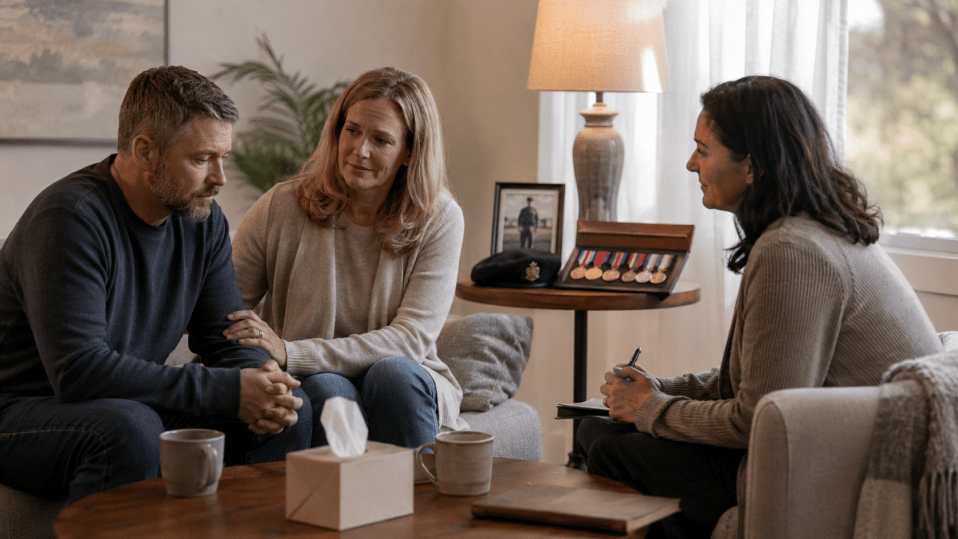
Grief and Loss Counselling for Veterans and Their Families
Grief can affect every part of a person’s life. For veterans and military families, bereavement may be made even more difficult by experiences of military service, trauma, separation, survivor’s guilt and the pressure to remain strong for others.
The death of a loved one, friend, former colleague or fellow service member can bring intense sadness, anger, guilt, loneliness and confusion. Military families may also experience grief linked to relationship breakdown, loss of identity, declining health, retirement from service or the transition from military to civilian life.
Although grief is a natural response to loss, nobody should have to face it alone.
Anxious Minds provides affordable grief and loss counselling for veterans and their families across the North East. Through our counselling services and Veteran Recovery Colleges, we offer compassionate, confidential and non-judgemental support to people struggling after bereavement or another significant loss.
Understanding Grief in the Armed Forces Community
Every experience of grief is different. There is no correct way to mourn and no fixed timetable for recovering after a loss.
For people connected to the Armed Forces, grief can sometimes be particularly complex.
Veterans may have experienced the death of friends or colleagues during training, active service, conflict or after leaving the military. Some may have lost several people over the course of their service and never had the time or opportunity to process those deaths.
During military service, individuals are often trained to remain focused, manage difficult emotions and continue performing under pressure. These qualities can be vital in operational environments, but they may make it harder to speak openly about grief later.
A veteran might believe they should be able to manage on their own. They may avoid asking for help because they do not want to appear weak, burden their family or revisit painful memories.
Military spouses, partners, children and carers can also experience complicated grief. They may be grieving while supporting a veteran who is dealing with trauma, poor mental health, addiction or physical illness.
At Anxious Minds, we understand that grief within the Armed Forces community can be connected to many different experiences. Our counsellors provide a safe space where veterans and their families can speak honestly without judgement.
What Types of Loss Can Affect Veterans?
Grief is most commonly associated with the death of someone important. However, veterans and their families can experience many different forms of loss.
These may include:
- The death of a fellow service member
- The death of a partner, parent, child, friend or relative
- Suicide bereavement
- Loss linked to conflict or active service
- The death of someone from a service-related illness
- Miscarriage, pregnancy loss or stillbirth
- The end of a marriage or long-term relationship
- Loss of military identity after leaving the Armed Forces
- Loss of rank, role, routine or responsibility
- Loss of physical health or independence
- Loss of employment or financial security
- Separation from the military community
- Retirement from service
- Estrangement from family members
- The death of a pet or assistance animal
Every loss matters.
Someone leaving the Armed Forces may grieve for the life they once had, even when leaving was their own decision. They may miss the sense of purpose, structure, identity and belonging that military service provided.
This form of grief is not always recognised by the veteran or those around them. However, the transition into civilian life can be a significant emotional adjustment.
Common Signs of Grief and Bereavement
Grief affects people emotionally, physically and psychologically. It can also influence behaviour, relationships and everyday routines.
Common emotional signs of grief include:
- Persistent sadness
- Anger or irritability
- Guilt or shame
- Emotional numbness
- Loneliness
- Anxiety
- Confusion
- Regret
- Helplessness
- Fear about the future
- Difficulty accepting the loss
- A sense that life has lost its meaning
Physical and behavioural signs may include:
- Difficulty sleeping
- Nightmares
- Changes in appetite
- Exhaustion
- Headaches or muscle tension
- Withdrawing from friends and family
- Losing interest in activities
- Increased alcohol consumption
- Drug misuse
- Gambling
- Working excessively to avoid emotions
- Difficulty concentrating
- Struggling to manage everyday responsibilities
Grief does not follow a predictable pattern. A veteran may appear to cope well immediately after a death but begin struggling months or even years later.
Military anniversaries, Remembrance events, funerals, reunions, news reports, photographs or contact with former colleagues may bring difficult memories and emotions back to the surface.
This does not mean that the person has failed to cope. Grief can return in waves, particularly when the loss is connected to trauma or military service.
Survivor’s Guilt Among Veterans
Survivor’s guilt can affect veterans who have lived through an event in which other people died or were seriously injured.
A veteran may repeatedly ask:
“Why did I survive?”
“Could I have done more?”
“Was it my fault?”
“Why did they die and not me?”
These thoughts can remain for many years. Even when a veteran logically understands that they were not responsible, they may still carry a deep sense of guilt.
Survivor’s guilt can contribute to depression, anxiety, post-traumatic stress, addiction, relationship difficulties and social isolation. Some veterans may believe they do not deserve to be happy or enjoy their lives because others did not return home.
Grief counselling gives veterans the opportunity to explore these feelings safely.
A counsellor will not judge or dismiss the person’s emotions. Instead, they can help the veteran understand the difference between feeling responsible and being responsible.
Over time, counselling may help the individual develop a more compassionate understanding of themselves and what happened.
Grief, Trauma and PTSD
Grief and trauma can sometimes overlap.
If a veteran witnessed a death, attempted to save someone or experienced a life-threatening event, they may struggle with traumatic memories alongside bereavement.
Possible symptoms include:
- Flashbacks
- Nightmares
- Intrusive thoughts
- Panic attacks
- Avoiding reminders of the event
- Feeling constantly alert or unsafe
- Sudden anger
- Emotional numbness
- Difficulty trusting people
- Disturbed sleep
- Feeling detached from family life
- Reliving the circumstances of the death
Traumatic grief can make it difficult to remember the person who died without also reliving how they died.
Professional counselling can help veterans process both the loss and the traumatic memories surrounding it. Support should always move at the individual’s pace. Veterans should never feel pressured to discuss details before they are ready.
Suicide Bereavement in the Veteran Community
Losing someone to suicide can bring particularly complex emotions.
Family members, friends and former colleagues may experience deep sadness alongside anger, guilt, shock and unanswered questions. They may repeatedly search for warning signs or question whether they could have prevented the death.
Veterans affected by suicide bereavement may also worry about stigma or feel unable to discuss what happened.
Some may have already experienced the deaths of colleagues during service. A further loss through suicide can reopen previous grief and trauma.
The Armed Forces community is often close-knit, meaning that one death can have a significant impact on an entire network of friends, families and former colleagues.
Suicide bereavement counselling provides a confidential space to talk openly about these difficult feelings. It can help people understand their emotional responses and reduce the isolation that often follows a suicide.
Anyone who is struggling after losing someone to suicide deserves compassion and professional support.
How Bereavement Affects Military Families
When a veteran is grieving, the whole family can be affected.
Partners may feel unsure about what to say or how to help. They may notice that the veteran has become withdrawn, angry, emotionally distant or increasingly dependent on alcohol or other unhealthy coping mechanisms.
Children may also notice changes in the home. They may not understand why a parent has become quieter, more irritable or less emotionally available.
Military families often become highly resilient because of deployments, relocations, uncertainty and periods of separation. However, resilience does not remove the need for support.
Partners and family members may need their own space to talk about the loss, their concerns and the pressure of supporting someone else.
Anxious Minds supports veterans and their families because we understand that good mental health support should consider the needs of the whole family.
When Should a Veteran Consider Grief Counselling?
There is no correct time to begin bereavement counselling.
Some people seek help shortly after a loss. Others may not feel ready until months or years later.
Counselling may be helpful when:
- Grief feels overwhelming or unmanageable
- The person feels unable to speak with family or friends
- Feelings of guilt or regret are persistent
- The veteran is experiencing traumatic memories
- Sleep has become severely disrupted
- Alcohol or drugs are being used to cope
- The person has withdrawn from family and social contact
- Anger is affecting relationships
- Everyday responsibilities feel impossible
- The veteran feels emotionally numb
- Previous military losses have resurfaced
- The individual has lost their sense of purpose
- Anxiety or depression is becoming more severe
- The person feels hopeless about the future
Asking for counselling is not a sign of weakness.
It is a practical step towards understanding what is happening and finding healthier ways to cope.
Veterans have spent much of their lives supporting others. They deserve to receive support when they need it too.
How Grief and Loss Counselling Can Help
Bereavement counselling provides a private and supportive environment where veterans and family members can talk freely.
A trained counsellor will listen without judgement. They will not tell the person how they should feel, force them to move on or expect them to follow a particular grieving process.
Counselling may help someone:
- Understand their emotional responses
- Process painful memories
- Explore survivor’s guilt
- Talk about the person who died
- Manage anger, regret and self-blame
- Develop healthier coping strategies
- Reduce isolation
- Improve communication with family members
- Prepare for anniversaries and remembrance events
- Rebuild routines
- Adjust to changes in identity
- Find meaning and purpose after loss
- Manage symptoms of anxiety or depression
The aim is not to forget the person who has died.
Counselling helps people find a way to carry the loss while gradually rebuilding their lives around it.
Supporting a Grieving Veteran
It can be difficult to know how to support a veteran who is grieving.
Some veterans may not want to discuss their emotions directly. Others may use humour, distraction or practical tasks to avoid painful conversations.
It is important not to pressure someone to talk, but it can help to let them know that support is available.
You could say:
“I am here when you are ready to talk.”
“You do not have to manage this on your own.”
“I have noticed you have not seemed yourself recently.”
“Would you like me to help you contact someone?”
Avoid telling the person to stay strong, move on or be grateful that they survived. These comments may be well intentioned, but they can make someone feel misunderstood.
Practical support can also make a difference. This might include attending an appointment with them, helping them make a telephone call, preparing a meal or simply spending time together.
Bereavement Counselling at Anxious Minds
Anxious Minds provides low-cost grief and loss counselling for veterans and their families across the North East.
Our counsellors offer a compassionate, confidential and non-judgemental service for people affected by bereavement, trauma, suicide loss and major life changes.
We understand the culture of the Armed Forces and the challenges that veterans and their families can face after service.
Our wider Veteran Recovery College services can also provide ongoing support, including peer support, mental health recovery activities, addiction recovery, outdoor therapy, practical advice and opportunities to reconnect with the veteran community.
This means veterans can receive more than a limited number of counselling sessions. Where appropriate, they can continue receiving support through the wider recovery community.
Veterans and family members do not need to wait until they reach crisis point before contacting us.
Early support can prevent grief, trauma and isolation from becoming more difficult to manage.
Veteran Recovery Colleges in the North East
Anxious Minds operates Veteran Recovery College services supporting former members of the Armed Forces and their families across the North East.
Our services are designed by people who understand military life, mental health challenges and the difficulties of transitioning into civilian communities.
Support may include:
- Grief and loss counselling
- Mental health counselling
- Peer support
- Recovery and wellbeing groups
- Addiction recovery services
- Outdoor therapy
- Employment support
- Benefits and housing advice
- Social activities
- Support for family members and carers
Our aim is to ensure that no veteran or military family feels abandoned when they need help.
You Do Not Have to Grieve Alone
Military culture often teaches people to keep going through difficult circumstances. However, carrying grief alone can affect mental health, physical wellbeing, relationships and family life.
There is strength in recognising when additional support is needed.
Grief counselling offers veterans and their families a safe place to speak openly, understand their emotions and begin moving forward at their own pace.
The loss will always remain part of your story, but it does not have to define the rest of your life.
Contact Anxious Minds
Veterans and family members struggling with grief or bereavement can contact Anxious Minds for information about counselling and wider recovery support.
Telephone: 0191 262 0305
Our team can explain the support available and help you take the next step.
You have supported others. Now it is time to allow someone to support you.


Post a comment