
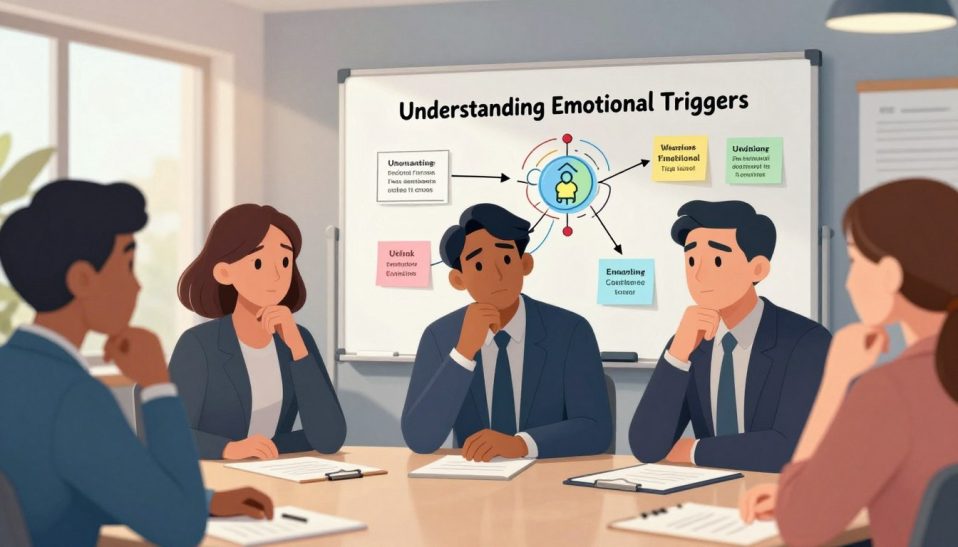
Have you ever felt a sudden surge of frustration or sadness without knowing why? Many of us experience these unexpected shifts in mood during our daily routines. Often, these reactions are linked to past events that shape how we respond to the world today.
Gaining clarity on these patterns is the first step toward better mental wellbeing. By learning to identify what sets off your internal alarm, you can regain control over your reactions. This process helps you navigate complex feelings with much greater ease and confidence.
This guide serves as a friendly starting point for your journey toward self-awareness. We will explore how emotional triggers influence your behaviour in subtle ways. By mastering this knowledge, you become more empowered to manage your inner world effectively. Let us begin this path to a calmer, more balanced life together.
The Science Behind Emotional Responses
Our bodies often react to the world long before our conscious minds catch up. These emotional responses are not merely random feelings; they are the result of intricate biological mechanisms working in the background. By exploring these pathways, we can better understand why certain situations cause us to feel overwhelmed.

How the Brain Processes Stimuli
Every piece of information from our environment travels through a complex neurological highway. Sensory input, such as a loud noise or a sharp tone of voice, hits the brain and is processed in milliseconds. This rapid transmission explains why some reactions feel instantaneous and beyond our immediate control.
Before we even have a chance to think logically, our brain has already assessed the situation for potential danger. This process is designed to keep us safe, but it can sometimes lead to triggering emotions that feel disproportionate to the actual event. Recognising this speed is the first step toward gaining mastery over our internal state.
The Role of the Amygdala in Fight or Flight
At the centre of this rapid reaction system sits the amygdala. This small, almond-shaped structure acts as the brain’s alarm system, constantly scanning for threats. When it detects something it perceives as dangerous, it immediately initiates the fight or flight response.
This survival mechanism floods the body with hormones like adrenaline to prepare us for action. While this was vital for our ancestors facing physical predators, it often activates today during non-physical stressors. Understanding these emotional responses allows us to pause and evaluate whether the threat is real or simply a habituated reaction.
Understanding Emotional Triggers and Their Origins
Have you ever wondered why a simple comment can suddenly ruin your entire day? Understanding emotional triggers is the first step toward breaking free from automatic, unhelpful reactions. By looking at these moments with kindness, we can begin to untangle the complex web of our internal responses.
Many of our reactions are not actually about the present moment at all. Instead, they are echoes of past experiences that have been stored in our memory. Distinguishing between past trauma and present reality allows us to see that our current environment might be safe, even if our body feels like it is in danger.
When we learn to separate historical pain from current facts, we gain the power to choose how we respond. This shift in perspective is essential for personal growth and emotional healing. It helps us move away from self-criticism and toward a more balanced way of living.
Common Psychological Triggers in Daily Life
We all encounter psychological triggers that can catch us off guard during our routine activities. These triggers often appear when we feel unheard, undervalued, or pressured by external expectations. Recognising these patterns is a powerful tool for maintaining your mental wellbeing.
Social Situations and Interpersonal Dynamics
Social settings can be particularly challenging when they mirror past conflicts or feelings of exclusion. You might find that a friend’s casual remark makes you feel defensive or anxious. These moments are often rooted in our need for connection and belonging, making them feel deeply personal even when they are not.
Workplace Stressors and Performance Anxiety
Professional environments often act as a pressure cooker for our deepest insecurities. High-stakes meetings or tight deadlines can easily spark feelings of inadequacy or fear of failure. Managing these stressors requires us to acknowledge that our performance does not define our total worth as a human being.
Practical Strategies to Identify Emotional Triggers
Gaining clarity on your internal landscape starts with simple, daily practices. When you learn to identify emotional triggers, you create a buffer between a stressful event and your automatic reaction. This process requires patience and a gentle approach toward your own experiences.
The Importance of Mindful Observation
Mindful observation involves watching your thoughts and feelings without immediate judgment. By staying present, you can notice when emotional triggers begin to surface in your daily life. This practice helps you remain an objective observer of your own mental state.
You might find that certain environments or conversations cause a shift in your mood. Staying present allows you to catch these shifts before they escalate into overwhelming reactions. It is a powerful way to build self-awareness over time.
Keeping an Emotional Journal to Track Patterns
Writing down your experiences is a highly effective method to identify emotional triggers. When you document your day, you can spot recurring themes or specific environmental cues that lead to intense feelings. This record serves as a map for your personal growth.
Try to note the time, the people involved, and the specific situation that caused distress. Over several weeks, you will likely see clear patterns emerge. Consistency is key when maintaining this journal to ensure you capture the full picture of your emotional health.
Recognising Physical Sensations Before the Reaction
Your body often provides the first clue that you are encountering emotional triggers. Before your mind fully processes a situation, you may notice a racing heart, shallow breathing, or tension in your shoulders. These physical signals act as early warning signs that your nervous system is becoming activated.
Learning to tune into these sensations allows you to pause before you respond. By acknowledging the physical shift, you can choose a more measured way to handle the moment. This connection between your body and mind is essential for long-term emotional regulation.
Enhancing Emotional Intelligence for Better Regulation
Developing high emotional intelligence allows you to navigate life’s complexities with greater ease. By refining your ability to manage your inner state, you create a foundation for lasting personal growth. This process of emotion regulation is not about suppressing feelings, but rather understanding them to respond with clarity.
Developing Self-Awareness Through Reflection
Self-awareness acts as the cornerstone of your personal development journey. By setting aside time for structured reflection, you can identify the subtle patterns that influence your daily mood. Taking a moment to look inward helps you recognise your unique emotional landscape before it becomes overwhelming.
Consider keeping a reflective log where you note your reactions to specific events. This practice fosters a deeper connection with your inner self. Over time, you will find that you can identify your needs more accurately, leading to more balanced interactions with others.
Techniques for Pausing Between Stimulus and Response
The most effective way to improve your emotion regulation is to create a conscious pause. When you feel a surge of intensity, try taking three deep, slow breaths before you speak or act. This simple gap provides the necessary space for your rational mind to catch up with your initial impulse.
Choosing to wait allows you to move from a reactive state to a thoughtful one. You might find that counting to ten or stepping away from a situation gives you the perspective you need. This deliberate delay is a powerful tool for maintaining composure in challenging moments.
Building Resilience Against Future Triggers
Building long-term resilience ensures you remain steady when faced with unexpected difficulties. By consistently applying your emotional intelligence, you become better equipped to handle future challenges with confidence. You learn that while you cannot control every external event, you can certainly control your internal experience.
Focus on celebrating small victories in how you handle your feelings. Each time you navigate a difficult moment with grace, you strengthen your capacity for future stability. Embracing this process will ultimately lead to a more peaceful and intentional way of living.
Mastering Your Emotional Landscape
Gaining control over your inner world is a rewarding journey that transforms how you interact with the world. By synthesising the strategies explored in this guide, you can build a stable foundation for your mental wellbeing.
Developing emotional awareness serves as the compass for this personal growth. It allows you to navigate complex situations with grace and composure. This practice is not a destination but a lifelong commitment to self-discovery.
Patience remains vital as you refine your ability to observe your reactions. Treat yourself with kindness during moments of struggle. Consistent practice will strengthen your resilience and help you maintain a balanced perspective.
You now possess the essential tools to manage your responses effectively. Applying these insights fosters deeper connections with your friends, family, and colleagues. A more fulfilling life awaits those who choose to engage with their feelings honestly.
Continue to prioritise your emotional awareness in your daily routine. Small, intentional steps lead to significant changes over time. Your commitment to this path ensures a clearer and more peaceful future.
FAQ
What does it mean to be understanding emotional triggers in our daily lives?
A: Understanding emotional triggers involves recognising that our intense internal reactions are often not just about the present moment, but are rooted in past experiences. These psychological triggers influence our behaviour in subtle ways, and by fostering emotional awareness, we can begin to navigate our inner world with more confidence. Organisations like Mind and the NHS often emphasise that this self-reflection is the first step toward improving overall mental wellbeing and emotion regulation.
Why do certain emotional responses feel so instantaneous and uncontrollable?
This happens because of the way the brain processes stimuli. Before a thought even reaches our conscious awareness, the amygdala—the brain’s ancient alarm system—can initiate a fight or flight response. This biological mechanism is designed to protect us from perceived threats. As Dr Bessel van der Kolk explains in his research on the body and trauma, these physiological emotional responses are often bypasses for our rational mind, which is why they feel so sudden.
How can I distinguish between a reaction to past trauma and the reality of my present situation?
Distinguishing between the two requires a compassionate look at your history. Psychological triggers often cause us to react to a current event as if it were a previous painful experience. By breaking down these triggering emotions into categories—such as interpersonal dynamics or workplace stressors—you can start to see patterns. For instance, if you feel extreme anxiety during a performance review at a company like PwC, it may be linked to older feelings of inadequacy rather than your actual job performance.
What are the best practical strategies to identify emotional triggers?
To identify emotional triggers, you should utilise mindful observation and keep a consistent emotional journal. Using tools like the Day One journaling app can help you document environmental cues and recurring feelings. It is also vital to recognise physical sensations, such as a tightening chest or shallow breathing, which act as early warning signs. By linking your body’s signals to your mind’s thoughts, you can catch a reaction before it fully takes hold.
How does developing emotional intelligence help with emotion regulation?
A: Emotional intelligence (EQ) provides the toolkit needed to manage your feelings effectively. A core technique, often championed by Daniel Goleman, involves creating a conscious pause between a stimulus and your response. This “space” allows for more thoughtful decision-making rather than impulsive reacting. Through structured reflection and building resilience, you can learn to handle future challenges at work or home with much greater composure.
Is mastering my emotional landscape a permanent fix for stress?
Achieving emotional awareness is an ongoing process rather than a one-time destination. It requires patience, kindness, and consistent practice. As Andy Puddicombe of Headspace often suggests, the goal isn’t to eliminate emotions, but to change your relationship with them. By synthesising these strategies, you can foster deeper connections with yourself and others, leading to a more balanced and fulfilling life in the long term.


