
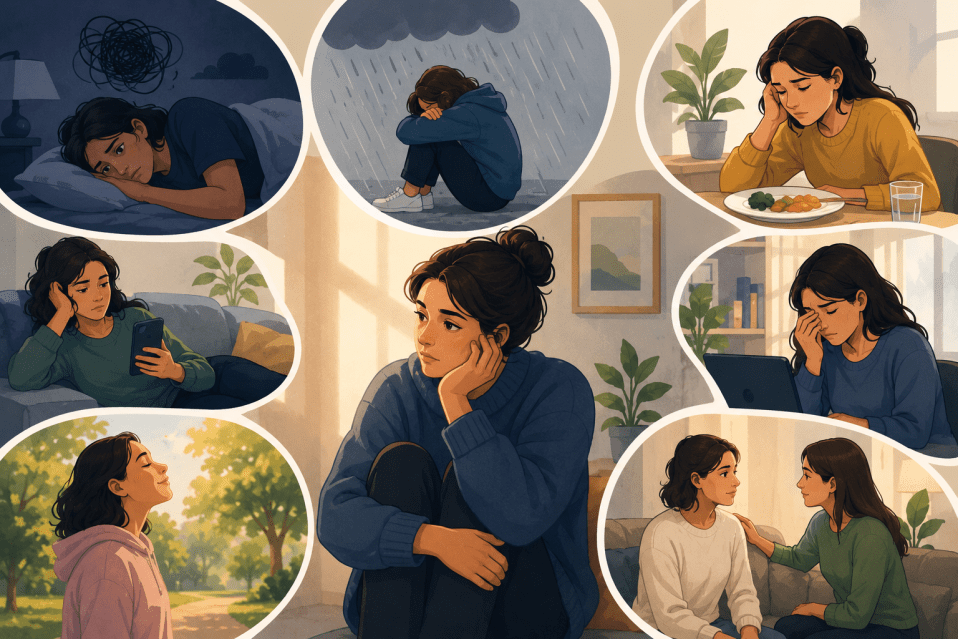
Depression can affect anyone, and it does not always look the way people expect. While some people may experience persistent sadness, others may feel numb, exhausted, irritable or disconnected from the people and activities around them.
Because depression can develop gradually, it is not always easy to recognise the signs in yourself. You may simply feel that you are not quite yourself, that everyday tasks are becoming harder, or that things you once enjoyed no longer seem important.
Recognising the signs of depression can be an important first step towards getting the right support.
What Is Depression?
Depression is more than simply feeling sad or having a bad day. Everyone experiences difficult emotions from time to time, particularly during periods of stress, bereavement, relationship difficulties or major life changes.
Depression usually involves persistent changes in mood, thoughts, behaviour and energy levels that begin to affect everyday life.
It can affect your relationships, work, sleep, confidence, motivation and physical wellbeing.
Depression can vary considerably from person to person. Some people may continue going to work and completing everyday responsibilities while struggling internally. Others may find even getting out of bed or leaving the house extremely difficult.
There is no single way that depression looks.
1. Feeling Low or Sad for Long Periods
One of the most recognised signs of depression is persistent low mood.
You may feel sad, empty or tearful without fully understanding why. These feelings may be present most days and may not disappear even when positive things happen.
Some people describe depression as feeling as though there is a heavy weight hanging over them.
Others may not feel noticeably sad at all. Instead, they may experience emotional numbness or feel disconnected from what is happening around them.
If low mood is continuing for weeks and affecting your daily life, it may be worth speaking to someone.
2. Losing Interest in Things You Used to Enjoy
Depression can make activities that once brought pleasure feel pointless or exhausting.
You may stop enjoying hobbies, socialising, exercise, music, sport or spending time with family and friends.
You might find yourself declining invitations or making excuses not to participate in things you previously looked forward to.
This loss of interest or enjoyment can be one of the clearest signs that your mental health may need attention.
3. Feeling Tired All the Time
Depression can have a significant impact on your energy levels.
You may feel exhausted even after sleeping or find that simple tasks require far more effort than they used to.
Getting dressed, preparing food, answering messages or going to work may suddenly feel overwhelming.
Fatigue can have many causes, so it is important not to assume it is always related to depression. However, persistent tiredness combined with changes in mood or motivation may indicate that something is wrong.
4. Changes in Your Sleep
Depression frequently affects sleep.
You may struggle to fall asleep, wake repeatedly during the night or wake very early in the morning.
Alternatively, you may find yourself sleeping much more than usual but still feeling tired.
Poor sleep can also make other symptoms worse. When you are exhausted, it becomes harder to concentrate, regulate emotions and deal with everyday stress.
This can create a difficult cycle in which depression affects sleep and poor sleep makes your mood even harder to manage.
5. Becoming More Irritable or Angry
Depression does not always look like sadness.
For some people, particularly those who find it difficult to express vulnerable emotions, depression may appear as irritability, frustration or anger.
You may notice yourself becoming impatient over small things, arguing more frequently or feeling constantly on edge.
Friends or family members may notice these changes before you do.
If you feel increasingly angry or irritated and cannot understand why, it may be worth considering whether stress, anxiety or depression could be contributing.
6. Withdrawing From Other People
Depression can make social contact feel difficult.
You may stop answering messages, avoid phone calls or turn down opportunities to meet friends.
Sometimes this is because you feel tired. At other times, you may worry that you will bring other people down or feel that nobody would understand what you are experiencing.
Unfortunately, withdrawing from others can increase feelings of loneliness and isolation.
Even maintaining small amounts of connection can be valuable when you are struggling.
7. Difficulty Concentrating or Making Decisions
Depression can affect the way your brain processes information.
You may notice that it becomes harder to concentrate at work, follow conversations, remember information or make decisions.
Even simple choices can begin to feel overwhelming.
You might read the same paragraph repeatedly without taking it in or struggle to remember what somebody has just told you.
These difficulties can be frustrating, but they are a common experience for people struggling with depression.
8. Feeling Worthless or Not Good Enough
Depression can change the way you see yourself.
You may become extremely self-critical, focus heavily on mistakes or feel that you are letting other people down.
Thoughts such as:
“I’m useless.”
“Everyone would be better off without me.”
“I can’t do anything right.”
“I should be coping better.”
may become increasingly common.
These thoughts can feel convincing when you are depressed, but they are not necessarily an accurate reflection of who you are or how other people see you.
Counselling can help you explore these negative beliefs and develop a more balanced understanding of yourself.
9. Changes in Appetite or Weight
Depression can also affect eating habits.
Some people lose their appetite and begin eating less than usual.
Others may eat more, particularly foods they associate with comfort.
Noticeable changes in appetite or weight can be another sign that your emotional wellbeing is being affected.
Again, there can be many physical reasons for changes in appetite, so persistent or unexplained changes should also be discussed with an appropriate healthcare professional.
10. Feeling Hopeless About the Future
Depression can make it extremely difficult to imagine things getting better.
You may feel trapped in your current situation or believe that nothing you do will make a difference.
This feeling of hopelessness can make it harder to ask for help because depression itself may convince you that support will not work.
But depression is treatable, and many people recover with the right combination of support, counselling, lifestyle changes and, where appropriate, medical treatment.
Reaching out can be an important first step.
11. Neglecting Yourself or Everyday Responsibilities
When depression becomes more severe, normal routines can become increasingly difficult.
You may struggle with:
- Personal hygiene
- Cleaning
- Cooking
- Paying bills
- Attending appointments
- Getting to work
- Looking after your home
- Responding to emails or messages
These difficulties are not simply laziness.
When someone is experiencing depression, motivation, energy and concentration can all be affected.
Breaking tasks into very small, manageable steps can sometimes help while you seek additional support.
12. Thoughts About Death or Suicide
Depression can sometimes lead to thoughts about death, self-harm or suicide.
These thoughts should always be taken seriously.
You may feel that people would be better off without you, wish you could disappear or begin thinking about ending your life.
If this is happening, tell someone.
You do not need to manage these thoughts alone.
If you believe you are in immediate danger or may act on thoughts of harming yourself, call 999 or go to your nearest Accident & Emergency department.
You can also contact your GP or an urgent mental health service for support.
When Should You Get Help for Depression?
It may be time to seek professional support if symptoms have continued for several weeks, are getting worse or are beginning to affect your everyday life.
You do not need to wait until things become unbearable.
Early support can make a significant difference.
Speaking to a GP may be appropriate, particularly if your symptoms are persistent or severe. Counselling can also provide a safe environment where you can talk openly about what is happening and begin exploring the thoughts, emotions and experiences contributing to how you feel.
How Counselling Can Help With Depression
Counselling provides a confidential space where you can talk to a trained professional without judgement.
A counsellor can help you understand your emotions, recognise negative patterns of thinking and explore experiences that may be affecting your mental health.
Counselling may also help you:
- Build confidence and self-esteem
- Develop healthier coping strategies
- Understand difficult emotions
- Improve relationships
- Process grief or trauma
- Manage anxiety alongside depression
- Reconnect with activities and people that matter to you
Recovery can take time, but small changes can gradually make everyday life feel more manageable.
Depression Support From Anxious Minds
At Anxious Minds, we provide accessible mental health support and counselling for people experiencing depression, anxiety, trauma, bereavement, stress and other emotional difficulties.
Our aim is to give people a safe and supportive place to talk, understand what they are experiencing and begin finding a way forward.
If you recognise some of these signs of depression in yourself, you do not have to wait until you reach crisis point before seeking help.
Taking the first step and talking to someone could make an important difference.
Find out more about counselling and mental health support from Anxious Minds at 0191 262 0305
If you or somebody else is in immediate danger or there is an immediate risk of serious harm, call 999 or go to your nearest Accident & Emergency department.


Post a comment