
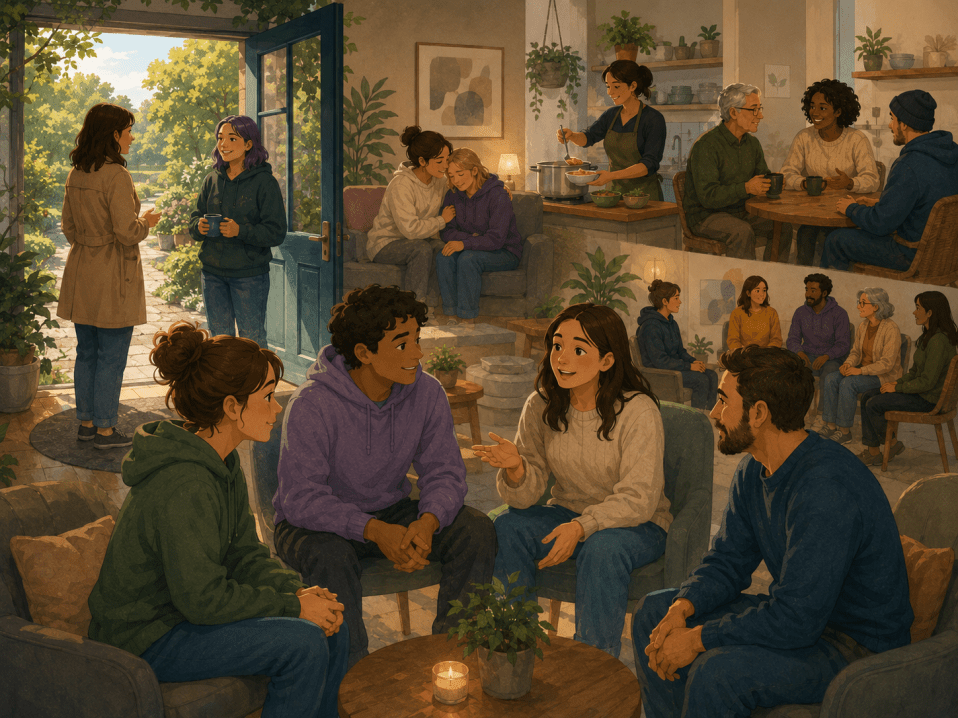
Mental health recovery does not happen in isolation. It happens in safe places, trusted relationships, supportive communities and services that understand the person behind the diagnosis. While clinical treatment, medication and NHS mental health services play an essential role, many people need more than appointments, assessments and short-term interventions. They need connection. They need understanding. They need somewhere to go before crisis takes over.
This is where community charities like Anxious Minds are vital.
Across the North East, thousands of people are living with anxiety, depression, trauma, addiction, grief, loneliness, stress and emotional distress. Many are trying to hold their lives together while waiting for support, struggling with poverty, dealing with relationship breakdown, coping with poor housing, or feeling forgotten by the system. For some, the biggest challenge is not only the mental health condition itself, but the lack of accessible support when they need it most.
Community mental health charities help fill that gap. They are often the first place people turn to when they feel lost, overwhelmed or unable to cope. They provide support that is local, human, flexible and rooted in real understanding.
Anxious Minds is a powerful example of why community-based mental health support matters.
Mental Health Recovery Needs More Than a Medical Model
Mental health is not just a medical issue. It is also a social, emotional and practical issue. A person may be struggling with depression, but they may also be isolated, in debt, unemployed, living in poor housing or caring for someone else. A young person may be anxious, but also facing school pressure, bullying, social media stress or family difficulties. A parent may be trying to keep the household together while silently dealing with burnout, trauma or emotional exhaustion.
Recovery cannot be reduced to one appointment or one treatment plan. People need services that look at the whole person.
Community charities are often able to do this because they work close to the people they support. They understand the local area, the pressures families face and the gaps in services. They can offer practical help, emotional support, peer connection and early intervention in a way that feels less formal and more approachable.
Anxious Minds has built its work around this principle. Its services are not designed around labels, but around people. Whether someone needs counselling, peer support, addiction support, outdoor therapy, crisis support, welfare advice or simply a safe place to talk, the focus is on meeting people where they are.
That approach can be life-changing.
Early Intervention Can Stop People Reaching Crisis
One of the biggest problems in mental health is that too many people only receive help once they are already in crisis. Waiting lists can be long, thresholds for support can be high, and people are often told they are either “not unwell enough” or are left waiting until they deteriorate.
This is not good enough.
Early intervention saves lives. When people can access support at the first signs of anxiety, depression, trauma or emotional distress, they have a much better chance of recovering before things become more serious. A conversation at the right time can prevent a crisis. A counselling session at the right time can stop someone feeling completely alone. A peer support group at the right time can remind someone that other people understand.
Community charities like Anxious Minds are vital because they provide that earlier layer of support. They are often more accessible, less intimidating and more flexible than statutory services. People can reach out before they hit breaking point.
For many, walking through the door of a community charity is easier than going to a hospital or clinical service. There is less fear, less stigma and more of a feeling that they will be listened to as a person.
That matters deeply. People often need support long before they need crisis intervention.
Trusted Relationships Are at the Heart of Recovery
Mental health recovery is built on trust. People who have experienced trauma, rejection, abuse, addiction, poverty or repeated disappointment from services may find it difficult to open up. They may have asked for help before and felt ignored. They may worry they will be judged, blamed or passed from one service to another.
Community charities can build long-term relationships with people in a way that many stretched services cannot. Staff, volunteers, counsellors and peer workers often become trusted faces. They remember people’s stories. They notice when someone is not themselves. They understand the importance of consistency.
At Anxious Minds, this relationship-based approach is central. People are not treated as numbers. They are welcomed, listened to and supported with dignity. For someone who feels invisible, that can be the first step towards hope.
Recovery is not only about reducing symptoms. It is about helping someone feel safe enough to speak, strong enough to take the next step and supported enough to keep going.
Community Support Reduces Isolation
Loneliness and isolation are major factors in poor mental health. Many people struggling with anxiety or depression withdraw from others. People experiencing trauma or addiction may feel ashamed. Older adults may feel forgotten. Parents may feel overwhelmed and alone. Young people may feel they do not belong.
Isolation can make mental health problems worse. It can increase hopelessness, reduce confidence and make it harder to ask for help.
Community charities create spaces where people can reconnect. Support groups, drop-ins, community kitchens, outdoor therapy sessions and peer-led activities help people feel part of something again. They remind people that they are not the only ones struggling.
Anxious Minds understands this clearly. Its community-based approach means people can access not only professional support, but also belonging. Whether through counselling, peer support, community meals, addiction recovery groups or outdoor activities, people are given opportunities to rebuild connection.
Sometimes recovery begins not with a clinical intervention, but with a cup of tea, a warm meal, a walk outdoors, or a conversation with someone who says, “I understand.”
Practical Problems Affect Mental Health
Mental health cannot be separated from real life. Someone may be anxious because they cannot pay their bills. Someone may be depressed because they are isolated and unemployed. Someone may be at risk because they are facing eviction, hunger or family breakdown.
Charities like Anxious Minds understand that recovery often requires practical support as well as emotional support. Advice around benefits, housing, employment, food, addiction, family issues and access to services can reduce the pressure that keeps people trapped in distress.
A person who is hungry, cold or at risk of homelessness cannot simply “think positive.” They need practical help. They need someone to stand beside them and help them deal with the problems that are damaging their mental health.
Community kitchens, food support, advice services and wellbeing groups are not separate from mental health; they are part of it. A meal can be the reason someone walks through the door. Once they are there, they may begin to trust, talk and access further support.
This is the strength of community charities. They understand that recovery is practical, social and emotional.
Charities Reach People Who Fall Through the Gaps
Many people fall between services. They may not meet the threshold for NHS mental health support, but they are still struggling. They may be discharged from one service but not stable enough to cope alone. They may need help with addiction and mental health at the same time. They may have complex needs that do not fit neatly into one box.
Community charities often support the people who do not fit the system.
Anxious Minds has become a lifeline for many people across the North East because it offers open, compassionate and flexible support. Instead of asking, “Which box do you fit into?” the approach is, “What do you need, and how can we help?”
That question can change lives.
People may come in for counselling and then realise they also need help with confidence, social isolation, benefits, food, employment or family stress. Others may come for a group or community activity and later feel safe enough to ask for emotional support.
A flexible community model allows people to access the right support at the right time, rather than being passed around systems that can feel confusing and overwhelming.
The Power of Lived Experience
One of the reasons community charities can be so effective is that many are built on lived experience. They are often founded or shaped by people who understand what it feels like to struggle, to be left without support, or to rebuild a life after crisis.
Lived experience brings compassion, honesty and understanding. It helps services feel more human. It can reduce the gap between “professional” and “service user” by creating an environment where people feel genuinely understood.
This does not replace professional standards. Good community charities combine lived experience with trained staff, accredited counsellors, safeguarding systems, confidentiality and strong governance. The best services bring together both compassion and professionalism.
Anxious Minds reflects this balance. Its work is rooted in real understanding, but also in structured, professional support. That combination is powerful because people need both: a service that knows what it is doing and a team that truly cares.
Mental Health Support Must Be Local
Local support matters because communities are different. The challenges facing people in the North East are shaped by local poverty, employment, housing, transport, health inequalities and social isolation. A one-size-fits-all approach does not work.
Community charities understand their areas because they are part of them. They know where people live, what barriers they face, what services are missing and what kind of support people are most likely to trust.
Local charities are often able to respond quickly to emerging needs. If people are struggling with food poverty, they see it. If more young people are presenting with anxiety, they see it. If families are under pressure, they see it. This local knowledge is invaluable.
Anxious Minds has grown because it responds to the real needs of local people. Its services have developed around what people are actually experiencing, not around what a distant system assumes they need.
That is why community charities must be central to mental health recovery.
Community Charities Need Sustainable Funding
Despite the vital role they play, community mental health charities often face enormous pressure. Demand is rising, referrals are increasing, and more people are presenting with complex needs. At the same time, funding is often short-term, competitive and uncertain.
This creates a serious problem. Charities are expected to fill gaps in the system, but are not always given the long-term funding needed to do so safely and sustainably.
If community charities are vital to mental health recovery, they must be treated as vital. That means investment, partnership and proper recognition. It means funding services before crisis, not only after tragedy. It means valuing the organisations that are already trusted by local communities.
Anxious Minds has shown what community mental health support can achieve when it is rooted in lived experience, professional standards and compassion. But services like this need ongoing support to continue meeting demand.
Without sustainable funding, communities lose more than services. They lose trusted places of safety, connection and hope.
Conclusion: Recovery Happens in Community
Mental health recovery is not just about treatment. It is about people. It is about safety, trust, dignity, belonging and hope. It is about having somewhere to turn before things become unbearable.
Community charities like Anxious Minds are vital because they provide support that is human, local and accessible. They help people early. They support those waiting for treatment. They walk alongside people after treatment ends. They reduce isolation, provide practical help and create spaces where people feel understood.
For many people, a community charity is not an optional extra. It is the difference between coping and crisis. It is the place where recovery begins.
The future of mental health support must recognise the power of community. NHS services, councils, funders and charities all have a role to play, but community organisations must be at the heart of the solution.
Because when people are struggling, they do not just need a service.
They need someone to listen.
They need somewhere safe to go.
They need hope.
And charities like Anxious Minds provide exactly that.


Post a comment