
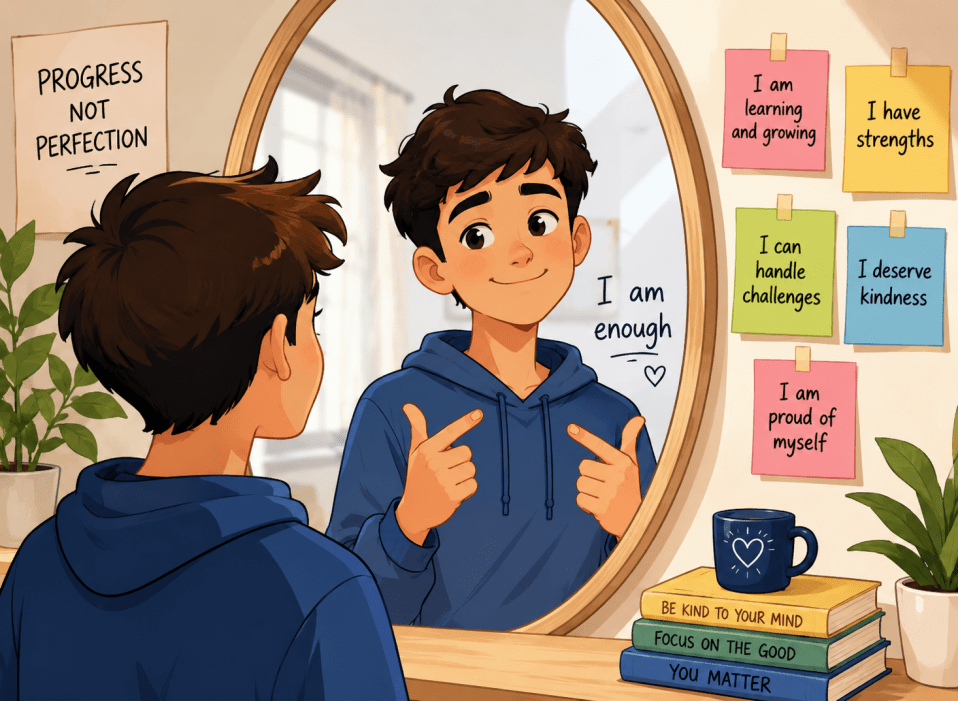
Low self-esteem can affect almost every area of life. It can influence how you see yourself, how you respond to challenges, the relationships you form and the opportunities you are willing to take.
If you regularly think that you are not good enough, compare yourself negatively with others or struggle to recognise your strengths, you may be experiencing low self-esteem.
The good news is that self-esteem is not fixed. It can be strengthened over time.
Learning how to improve low self-esteem involves becoming more aware of negative thinking patterns, developing a more balanced view of yourself and gradually building confidence through everyday actions.
What Is Self-Esteem?
Self-esteem is the way you think and feel about yourself.
Healthy self-esteem does not mean believing you are perfect or better than everyone else. It means being able to recognise your strengths and weaknesses while still believing that you have value.
Someone with healthy self-esteem may make mistakes, experience rejection or have difficult days without automatically believing that they are a failure.
Low self-esteem can make everyday setbacks feel much more personal.
You might think:
“I’m not good enough.”
“Everyone else is better than me.”
“I always get things wrong.”
“Nobody really likes me.”
“I’ll probably fail, so there is no point trying.”
When these thoughts happen repeatedly, they can begin to influence how you behave and what you believe about yourself.
What Causes Low Self-Esteem?
There is rarely one single cause of low self-esteem.
It can develop because of experiences in childhood, relationships, school, work or later life.
Possible causes include:
Being criticised frequently.
Bullying.
Difficult family relationships.
Abuse or neglect.
Relationship breakdowns.
Losing a job.
Financial problems.
Long-term stress.
Social isolation.
Experiencing discrimination.
Comparing yourself constantly with other people.
Failing to meet unrealistic expectations.
Sometimes low self-esteem develops gradually.
For example, repeated criticism from a parent, partner, teacher or employer may eventually influence the way you speak to yourself internally.
Even when the criticism has stopped, that negative inner voice may continue.
Recognise Negative Self-Talk
One of the most important steps in improving low self-esteem is recognising how you speak to yourself.
Many people are far more critical of themselves than they would ever be towards another person.
You might make a small mistake and immediately think:
“I’m useless.”
Or you might receive criticism and think:
“Everyone must think I’m terrible.”
Start paying attention to these automatic thoughts.
Then ask yourself:
Would I speak to a friend this way?
Is this thought completely accurate?
Am I focusing only on what went wrong?
What would be a more balanced way of looking at this?
Instead of saying:
“I always mess everything up.”
Try:
“I made a mistake, but that does not mean I fail at everything.”
The aim is not to pretend everything is perfect. It is to replace harsh, unrealistic thoughts with fairer ones.
Stop Comparing Yourself With Other People
Constant comparison can have a major impact on confidence and self-worth.
Social media can make this particularly difficult because people often share the best parts of their lives.
You may compare your everyday reality with somebody else’s carefully selected highlights.
Remember that you rarely know the full story behind what you see.
Someone may appear successful, confident or happy while dealing with struggles you know nothing about.
Try measuring your progress against your own past rather than another person’s life.
Ask:
What have I learned?
What have I improved?
What challenges have I overcome?
Small progress still matters.
Identify Your Strengths
People with low self-esteem often find it easy to identify weaknesses but difficult to recognise strengths.
Try writing down things you are good at.
They do not need to be major achievements.
Your strengths might include:
Being reliable.
Listening to others.
Being patient.
Working hard.
Supporting family members.
Being creative.
Having a good sense of humour.
Being determined.
Remaining calm during difficult situations.
Helping other people.
If this feels uncomfortable, imagine somebody close to you describing your positive qualities.
You could also ask trusted friends or family members what they value about you.
Sometimes other people can see strengths that we overlook.
Set Small Achievable Goals
Confidence often grows through action.
If you wait until you feel completely confident before trying something new, you may wait a very long time.
Instead, choose small, realistic goals.
This might include making a phone call you have been avoiding, attending a group, going for a short walk, applying for a course or speaking up during a meeting.
Each small achievement gives your brain evidence that you are capable.
Over time, these experiences can challenge the belief that you cannot cope.
Avoid setting goals that are so large that they become overwhelming.
Progress is easier when you break things into manageable steps.
Learn to Accept Compliments
People with low self-esteem often dismiss compliments.
Someone might say:
“You did a great job.”
And you immediately respond:
“It was nothing.”
Try simply saying:
“Thank you.”
You do not have to explain the compliment away.
Learning to accept positive feedback can gradually help you develop a more balanced picture of yourself.
You can also keep a record of positive comments, achievements or moments you are proud of.
Look back at them when you are having a difficult day.
Spend Time With Supportive People
The people around you can influence how you feel about yourself.
Healthy relationships should allow you to feel respected, supported and valued.
If someone constantly criticises, humiliates or controls you, their behaviour can gradually damage your confidence.
Where possible, spend more time with people who encourage you and treat you with respect.
This does not mean surrounding yourself with people who agree with everything you do.
Supportive people can still be honest while remaining kind and respectful.
Learn to Set Boundaries
Low self-esteem can make it difficult to say no.
You may worry that people will become angry, reject you or stop liking you if you do not meet their expectations.
This can lead to constantly putting other people’s needs before your own.
Healthy boundaries are an important part of self-respect.
You are allowed to say:
“I cannot do that today.”
“I need some time to think about it.”
“I’m not comfortable with that.”
Learning to set boundaries may feel uncomfortable at first, particularly if you are used to pleasing other people.
With practice, it can help you feel more confident and in control.
Stop Expecting Perfection
Perfectionism can seriously damage self-esteem.
If your standard is always perfection, almost everything you do will eventually feel disappointing.
You may believe:
“If I cannot do it perfectly, I should not do it at all.”
Try replacing perfection with progress.
Ask yourself:
“Is this good enough?”
“What have I learned?”
“What would I do differently next time?”
Making mistakes does not mean you are incapable.
Mistakes are part of learning.
Take Care of Your Physical Health
Mental and physical wellbeing are closely connected.
You may notice that your confidence becomes worse when you are exhausted, stressed or not looking after yourself.
Try to maintain basic routines around sleep, food and physical activity.
Exercise does not need to mean going to the gym.
Walking, swimming, cycling, gardening or any form of movement you enjoy can be beneficial.
Looking after yourself can also reinforce an important message:
“My wellbeing matters.”
Do Something You Enjoy
Low self-esteem can cause people to stop doing activities they once enjoyed.
You may withdraw socially or convince yourself that you are not good enough to participate.
Try reconnecting with hobbies and interests.
This might include:
Art.
Music.
Gardening.
Cooking.
Sports.
Walking.
Volunteering.
Reading.
Learning something new.
Activities can provide a sense of achievement, connection and identity beyond whatever difficulties you are currently experiencing.
Challenge Avoidance
Low self-esteem often leads to avoidance.
You may avoid social situations because you assume people will judge you.
You may avoid applying for jobs because you believe you will fail.
You may avoid trying new things because you are worried about embarrassment.
The problem is that avoidance prevents you from discovering whether your fears are accurate.
Start gradually.
Choose one manageable situation that you would normally avoid and take a small step towards it.
Each positive experience can help weaken negative beliefs about yourself.
Practise Self-Compassion
Self-compassion means treating yourself with some of the same patience and understanding you would offer another person.
It does not mean making excuses or ignoring mistakes.
It means recognising that struggling, failing and feeling uncertain are normal parts of being human.
Instead of thinking:
“I should be stronger than this.”
Try:
“I’m having a difficult time and I’m doing what I can.”
Small changes in language can make a significant difference over time.
How Counselling Can Help With Low Self-Esteem
Sometimes low self-esteem is connected with experiences that are difficult to work through alone.
Counselling can provide a confidential and supportive space to understand where negative beliefs about yourself came from.
A counsellor may help you explore:
Negative thinking patterns.
Past criticism or bullying.
Trauma.
Relationship difficulties.
Fear of rejection.
Low confidence.
Perfectionism.
Anxiety.
Depression.
People-pleasing.
Difficulty setting boundaries.
Therapy can help you recognise that many of the beliefs you hold about yourself may have developed because of past experiences rather than because they are true.
When Should You Seek Support?
Consider seeking professional support if low self-esteem is significantly affecting your relationships, work, education or everyday life.
You may also benefit from support if you regularly avoid situations, feel unable to make decisions, struggle to accept yourself or experience persistent anxiety or low mood.
You do not need to wait until things become unbearable before asking for help.
Early support can make problems easier to manage.
Final Thoughts
Learning how to improve low self-esteem takes time.
There may not be one single moment when you suddenly become confident.
Instead, confidence is usually built through hundreds of small experiences.
Challenge negative self-talk.
Recognise your strengths.
Set realistic goals.
Spend time with supportive people.
Set healthier boundaries.
Allow yourself to make mistakes.
Most importantly, try not to judge your entire worth based on one difficult experience, relationship, mistake or period of your life.
You are more than your setbacks.
With time, support and practice, it is possible to develop a kinder and more balanced view of yourself and build stronger, healthier self-esteem.


Post a comment