

A panic attack can be frightening, overwhelming and difficult to understand, particularly when it happens unexpectedly. Your heart may race, your breathing may change, you might feel dizzy or shaky, and you may become convinced that something terrible is happening.
Although panic attacks can feel extremely intense, there are practical ways to manage them and reduce the fear surrounding them. Learning how to cope with panic attacks can help you understand what is happening in your body, respond more calmly and gradually regain confidence.
This article explains the symptoms of panic attacks, why they happen and some useful techniques that may help you cope.
A panic attack is a sudden period of intense fear or anxiety that can cause powerful physical and emotional symptoms.
What Is a Panic Attack?
According to the NHS, symptoms can include a racing heartbeat, dizziness, sweating, trembling, shortness of breath, tingling sensations, nausea and feeling as though you are losing control.
For many people, the physical sensations are so strong that they believe they are having a heart attack, are about to collapse or are in immediate danger.
Panic attacks can happen during stressful situations, but they can also appear unexpectedly.
Having an occasional panic attack does not necessarily mean you have panic disorder. Panic disorder is generally associated with repeated unexpected panic attacks and ongoing anxiety about experiencing another attack.
What Causes Panic Attacks?
There is not always an obvious reason why a panic attack happens.
Panic attacks involve the body’s natural stress response becoming highly activated. Your brain may interpret something as dangerous and trigger the body’s fight-or-flight response, even when there is no immediate physical threat.
Possible triggers can include:
Stress at work or home
Relationship problems
Bereavement or loss
Financial worries
Health concerns
Past traumatic experiences
Major life changes
Lack of sleep
Certain situations or environments
Fear of having another panic attack
Sometimes people experience their first panic attack without being able to identify any particular trigger.
Recognise What Is Happening
One of the most important steps in learning how to manage panic attacks is recognising what is happening.
During a panic attack, remind yourself:
“This feels frightening, but I recognise these symptoms as panic.”
Panic can become stronger when you interpret physical symptoms as evidence that something catastrophic is happening.
For example, you might notice your heart beating quickly and immediately think:
“I am having a heart attack.”
That frightening thought may increase your anxiety, causing your heart to beat even faster.
Understanding this cycle can help you respond differently.
Slow Down Your Breathing
Breathing can become fast and shallow during a panic attack.
Try to slow your breathing rather than taking repeated large breaths.
Breathe gently through your nose and allow yourself to breathe out slowly and comfortably.
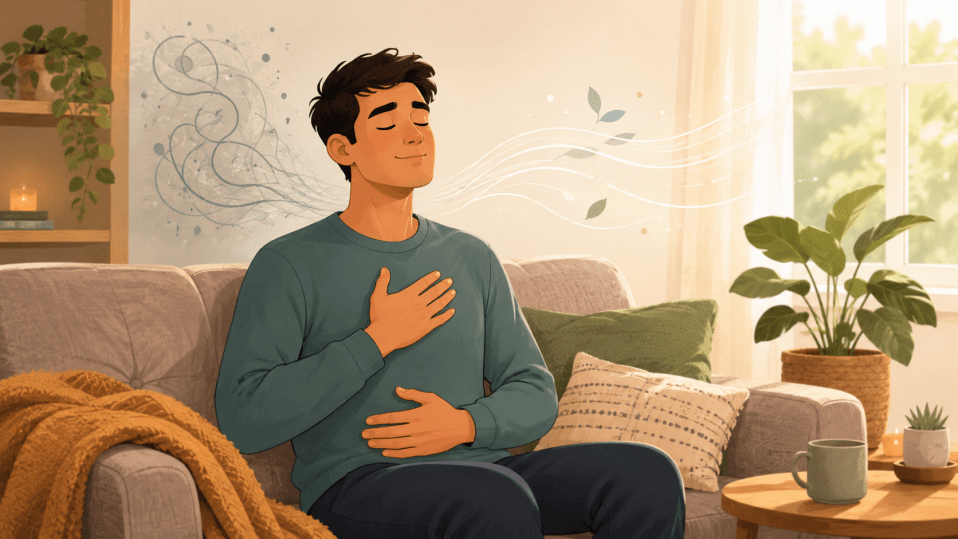
You could try breathing in gently for around four seconds and breathing out for around six seconds.
Do not worry about following an exact pattern. The aim is simply to make your breathing slower and more relaxed.
Controlled breathing techniques are commonly used to help people manage the physical sensations associated with panic.
Use Grounding Techniques
Grounding can help bring your attention away from frightening thoughts and back towards what is happening around you.
One commonly used technique is the 5-4-3-2-1 exercise.
Look around and identify:
Five things you can see.
Four things you can touch.
Three things you can hear.
Two things you can smell.
One thing you can taste.
You do not have to complete this perfectly.
The purpose is to focus your attention on your surroundings rather than constantly monitoring how your body feels.
You can also focus on something physical such as feeling your feet against the floor, holding a cool object or noticing the texture of something in your hands.
Remind Yourself That the Panic Will Pass
When you are experiencing a panic attack, it can feel as though the sensation will continue indefinitely.
Try reminding yourself:
“This is a panic attack. It will pass.”
Rather than fighting every sensation, try allowing the feelings to rise and fall.
You might imagine the panic as a wave. The intensity builds, reaches a peak and eventually decreases.
Fighting the sensations or desperately trying to make them disappear can sometimes make you even more frightened.
Instead, acknowledge what is happening and give your body time to settle.
Try Not to Escape Immediately
When panic happens in a particular place, your natural reaction may be to leave immediately.
Sometimes leaving is necessary, particularly if you are genuinely unsafe.
However, repeatedly escaping situations because you are frightened of experiencing panic can sometimes reinforce the belief that the situation itself is dangerous.
For example, someone who has a panic attack in a supermarket might start avoiding supermarkets completely.
That avoidance can gradually spread to other shops, crowded places or public spaces.
If you are receiving professional support for panic attacks, you may learn ways of gradually facing feared situations safely rather than avoiding them completely.
Reduce Your Fear of Physical Sensations
One reason panic attacks can become recurring is that people begin fearing the sensations associated with panic.
You might become extremely aware of your heartbeat, breathing, temperature or balance.
You may constantly check:
“Is my heart beating faster?”
“Am I starting to feel dizzy?”
“Is another panic attack coming?”
This constant monitoring can make normal physical changes feel threatening.
Learning that physical sensations such as an increased heartbeat can occur for many harmless reasons may reduce some of that fear.
Exercise, excitement, caffeine, walking upstairs and stress can all temporarily change how your body feels.
Identify Your Panic Attack Triggers
Keeping a simple record can help you identify patterns.
After a panic attack, write down:
Where you were.
What you were doing.
What you were thinking about.
How you felt physically.
What happened immediately beforehand.
How much sleep you had.
Whether you had been under additional stress.
Over time, you may notice that panic attacks happen more frequently during certain situations or periods of increased stress.
Understanding your triggers can make panic feel less unpredictable.
Look After Your General Wellbeing
Managing your overall stress levels may also help you cope more effectively with anxiety and panic.
Try to maintain regular sleep, eat regularly and include physical activity in your routine.
Exercise is also discussed within NICE guidance as part of maintaining good general health for people experiencing panic disorder.
It may also help to notice whether large amounts of caffeine or other stimulants make you feel more anxious or physically restless.
Finding time for relaxation, hobbies, social connection and activities you enjoy can help reduce overall stress.
Talk to Someone About Your Panic Attacks
Panic attacks can become isolating because people sometimes feel embarrassed about what they are experiencing.
You may worry that other people will not understand.
Talking to someone you trust can help.
Explain what happens when you experience panic and what you find helpful.
For example, you might ask someone to sit quietly with you, help you focus on your breathing or simply reassure you while the panic passes.
You do not have to deal with panic alone.
How Counselling Can Help With Panic Attacks
If panic attacks are happening regularly or affecting your everyday life, counselling or psychological therapy may help.
Talking therapy can help you understand your panic attacks, recognise triggers and change the thoughts and behaviours that may be maintaining the cycle.
Cognitive Behavioural Therapy, commonly known as CBT, is one psychological treatment used for panic disorder. NICE guidance recommends psychological interventions including CBT and guided self-help depending on the person’s circumstances and severity of symptoms.
Therapy may help you explore:
What triggers your panic attacks
How you respond to physical sensations
Fear of having another panic attack
Avoidance behaviours
Negative thinking patterns
Stress and anxiety
Past experiences
Practical coping techniques
The aim is not simply to make a panic attack stop. It is also to reduce the fear you have about panic itself.
When Should You Seek Professional Help?
Consider speaking to your GP or a mental health professional if panic attacks are happening regularly, becoming more severe or beginning to affect your everyday life.
For example, seek support if you are avoiding work, travelling, social situations, shops or other everyday activities because you are frightened of experiencing another attack.
The NHS advises that talking therapies and medication are the main treatments for panic disorder, with treatment depending on individual symptoms and circumstances.
It is also important not to automatically assume that every new physical symptom is caused by anxiety.
Symptoms such as chest pain, breathing difficulties or fainting can have causes other than panic. If you experience new, severe or unexplained symptoms, particularly if you are uncertain about what is happening, seek appropriate medical advice.
Create Your Own Panic Attack Coping Plan
Having a simple plan prepared in advance can be reassuring.
Your plan might include:
Recognise what is happening.
Remind yourself that the panic will pass.
Slow your breathing.
Focus on your surroundings.
Try not to fight every sensation.
Use grounding techniques.
Contact someone you trust if necessary.
Afterwards, give yourself time to recover.
Keeping your plan somewhere accessible, such as in your phone, can make it easier to remember when you are feeling overwhelmed.
Final Thoughts
Learning how to cope with panic attacks takes time and practice.
A panic attack can feel incredibly powerful, but understanding what is happening can reduce some of the fear surrounding it.
Try to focus on slowing your breathing, grounding yourself in the present moment and reminding yourself that the feelings will pass.
Most importantly, do not allow embarrassment or fear to prevent you from seeking support.
If panic attacks are beginning to control where you go, what you do or how you live your life, professional support can help you understand the causes, develop effective coping strategies and gradually rebuild your confidence.
With the right understanding, coping techniques and support, panic attacks can become much more manageable.


Post a comment