
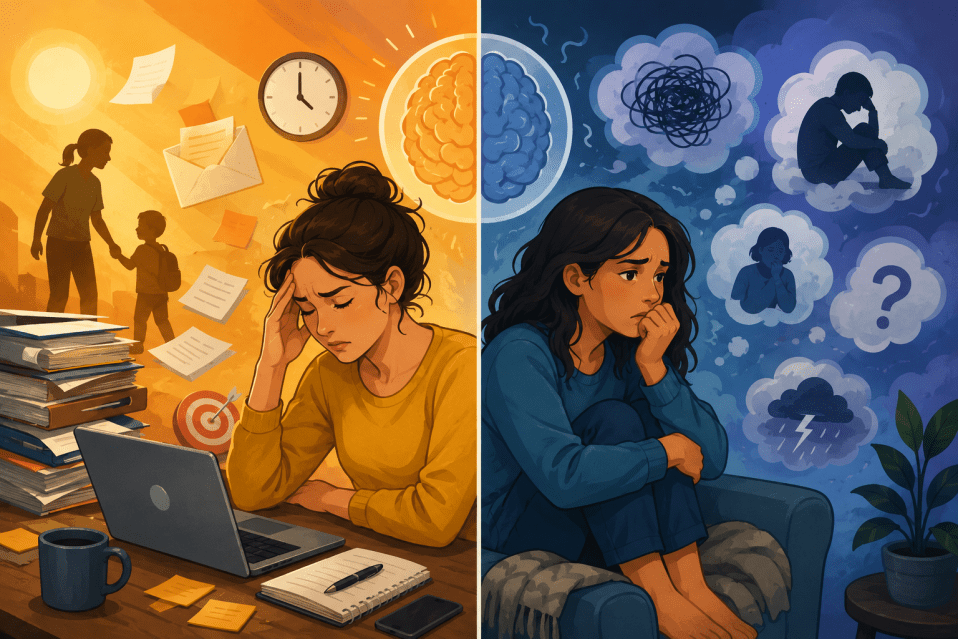
Stress and anxiety can feel very similar. Both may cause worry, tension, sleep problems, difficulty concentrating and uncomfortable physical sensations. Because their symptoms often overlap, it is not always easy to understand whether you are experiencing stress, anxiety or a combination of both.
The main difference between stress and anxiety is usually the source and duration of the response. Stress is commonly linked to a recognisable pressure or challenge, while anxiety may continue even when there is no immediate threat or the original stressful situation has ended.
Both are normal human responses. However, when stress or anxiety becomes persistent, overwhelming or begins to interfere with daily life, additional support may be needed.
What Is Stress?
Stress is the body’s response to pressure, demands or difficult situations. It often occurs when you feel that the challenges you face are greater than your ability or resources to manage them.
Common causes of stress include:
- heavy workloads
- financial problems
- relationship difficulties
- caring responsibilities
- health concerns
- exams or deadlines
- moving home
- unemployment
- bereavement
- major life changes
Stress is not always harmful. In small amounts, it can provide energy and motivation. It may help you prepare for an important meeting, complete a task or respond quickly to a problem.
Stress becomes more concerning when it continues for a long time or when the pressures involved feel unmanageable.
The NHS explains that stress can affect how someone feels, thinks, behaves and physically functions. Symptoms may include irritability, feeling overwhelmed, racing thoughts, headaches, muscle tension, dizziness and changes in sleep or appetite.
What Is Anxiety?
Anxiety is a feeling of fear, unease or worry. It is the body’s response to a real or perceived threat and can occur even when there is no obvious danger.
Most people experience anxiety occasionally. You may feel anxious before attending an interview, receiving medical results, travelling somewhere unfamiliar or having a difficult conversation.
Temporary anxiety in these situations is understandable. It becomes a problem when the fear is intense, difficult to control, lasts for a long time or causes someone to avoid important parts of life.
Anxiety may involve:
- persistent worry
- expecting the worst
- feeling on edge
- racing thoughts
- difficulty relaxing
- fear of losing control
- avoiding people, places or situations
- repeatedly seeking reassurance
- panic attacks
- physical sensations such as shaking, sweating or a racing heart
The NHS describes anxiety as a feeling of stress, panic or fear that can affect everyday life both physically and psychologically.
What Is the Main Difference Between Stress and Anxiety?
The clearest difference is that stress usually has an identifiable external cause.
For example, you may feel stressed because you have too much work, are struggling financially or are dealing with a family problem. If the situation improves or is resolved, the stress will often begin to reduce.
Anxiety may be connected to a stressful event, but it can continue after the event has passed. It may also occur without a clear external cause.
Someone experiencing anxiety might know that they are currently safe but still feel that something bad is about to happen.
A simple way to understand the difference is:
Stress often says: “I have too much to manage.”
Anxiety often says: “Something bad might happen.”
This distinction is not always exact. Stress can trigger anxiety, and living with anxiety can create additional stress.
Stress Versus Anxiety: Common Symptoms
Stress and anxiety can produce many of the same physical and emotional symptoms because both activate the body’s threat response.
Symptoms shared by stress and anxiety may include:
- headaches
- muscle tension
- disturbed sleep
- tiredness
- digestive problems
- sweating
- dizziness
- rapid heartbeat
- shortness of breath
- irritability
- difficulty concentrating
- feeling overwhelmed
- changes in appetite
However, there can be some differences in the way these symptoms appear.
Stress is often associated with frustration, pressure and feeling unable to cope with current demands. Anxiety is more likely to involve persistent fear, apprehension and worry about what could happen.
Avoidance is also common with anxiety. A person may stop travelling, attending social events, making phone calls or entering particular places because they fear how they will feel.
Can Stress Turn Into Anxiety?
Long-term or severe stress can contribute to anxiety.
When the body remains under pressure for an extended period, it may become difficult to switch off the threat response. The person may begin worrying even during periods when nothing urgent is happening.
For example, someone experiencing prolonged workplace stress may start worrying constantly about making mistakes, losing their job or being criticised. Eventually, the worry may continue at weekends, during holidays or after they have changed roles.
Mind notes that experiencing significant or prolonged stress may contribute to mental health difficulties such as anxiety or depression.
This does not mean everyone who experiences stress will develop an anxiety condition. Access to support, coping strategies, personal circumstances and previous experiences can all influence how someone responds.
What Causes Stress?
Stress normally develops in response to something happening in a person’s life.
Possible causes include:
- having too many responsibilities
- feeling unsupported
- experiencing conflict
- facing uncertainty
- dealing with discrimination
- struggling with debt
- working long hours
- living with illness or pain
- caring for someone
- experiencing a major loss
Sometimes, several smaller pressures build up over time. A person may cope with each individual demand but feel overwhelmed when they occur together.
Positive life events can also cause stress. Getting married, starting a new job, having a baby or moving home may be welcome changes, but they can still require significant emotional and practical adjustment.
What Causes Anxiety?
Anxiety can be caused by a combination of factors rather than one specific event.
Possible contributors include:
- current stress
- difficult childhood experiences
- trauma
- bereavement
- bullying or abuse
- relationship problems
- financial insecurity
- physical health conditions
- medication or substance use
- having a family history of anxiety
- particular personality traits
- major uncertainty or change
Anxiety is a natural response to stress or perceived danger. However, it can become difficult when the response is stronger than the current situation requires or remains active for a prolonged period.
How Long Do Stress and Anxiety Last?
Stress often improves when the pressure causing it is removed or becomes easier to manage.
For example, stress linked to a deadline may reduce once the work has been completed. Stress connected to financial hardship or caring responsibilities may last longer because the underlying situation remains unresolved.
Anxiety can remain even when the original concern has passed. A person may continue to feel frightened, tense or watchful without fully understanding why.
Generalised anxiety disorder involves worry that affects everyday life and is difficult to control. People with this condition may feel anxious about several different areas of life rather than one specific situation.
How to Manage Stress
Managing stress often involves addressing the practical cause as well as the emotional response.
Helpful steps may include:
Identify the Main Pressure
Write down what is causing the most stress. Separating one large problem into smaller parts can make it feel more manageable.
Prioritise Tasks
Decide what genuinely needs to be completed now and what can wait. Try to avoid treating every task as equally urgent.
Set Boundaries
Reducing unnecessary commitments and saying no when you are overloaded can protect your wellbeing.
Ask for Practical Support
Support may involve sharing responsibilities, discussing workload with an employer, seeking financial advice or asking family members for help.
Protect Time for Recovery
Regular sleep, movement, nutritious meals, relaxation and enjoyable activities can help the body recover from periods of pressure.
How to Manage Anxiety
Anxiety management may require learning to respond differently to fear and uncertainty.
Helpful approaches include:
Slow Your Breathing
Anxiety can cause rapid, shallow breathing. Breathing slowly and steadily may help calm the body’s threat response.
Question Anxious Predictions
Ask yourself whether the feared outcome is certain, possible or simply one of many potential outcomes.
Reduce Avoidance Gradually
Avoidance may provide immediate relief but can strengthen anxiety over time. Taking manageable steps towards feared situations can help rebuild confidence.
Ground Yourself in the Present
Notice what you can see, hear, touch and physically feel. Grounding can redirect attention away from imagined future threats.
Limit Reassurance-Seeking
Constant checking may briefly reduce anxiety, but the relief often does not last. Practising uncertainty can help weaken the cycle.
Speak to Someone
Talking to a trusted person, counsellor or healthcare professional can help you understand what you are experiencing.
When Should You Seek Help?
Consider seeking professional support when stress or anxiety:
- continues for several weeks
- affects your sleep or appetite
- interferes with work or education
- causes you to avoid everyday activities
- damages your relationships
- leads to panic attacks
- causes persistent physical symptoms
- leads to increased alcohol or drug use
- makes you feel unable to cope
- causes thoughts of self-harm or suicide
A GP can help assess your symptoms and discuss suitable support. Adults in England may also be able to refer themselves directly to NHS Talking Therapies without first speaking to a GP.
It is important not to assume that every physical symptom is caused by stress or anxiety. Seek medical advice if symptoms are new, severe, persistent or concerning.
Final Thoughts
Stress and anxiety are closely connected, but they are not exactly the same.
Stress usually develops in response to a specific pressure and may improve when that pressure is reduced. Anxiety is more closely associated with ongoing fear or worry and may continue without an obvious current threat.
You can experience both at the same time. Stress may trigger anxious thoughts, while anxiety may make everyday demands feel more difficult to manage.
Recognising what you are experiencing can help you choose the right response. Stress may require practical changes, additional resources or reduced demands. Anxiety may require support with fear, avoidance, uncertainty and unhelpful thought patterns.
Neither stress nor anxiety is a personal failure. With appropriate coping strategies and professional support when needed, both can become more manageable.


Post a comment