
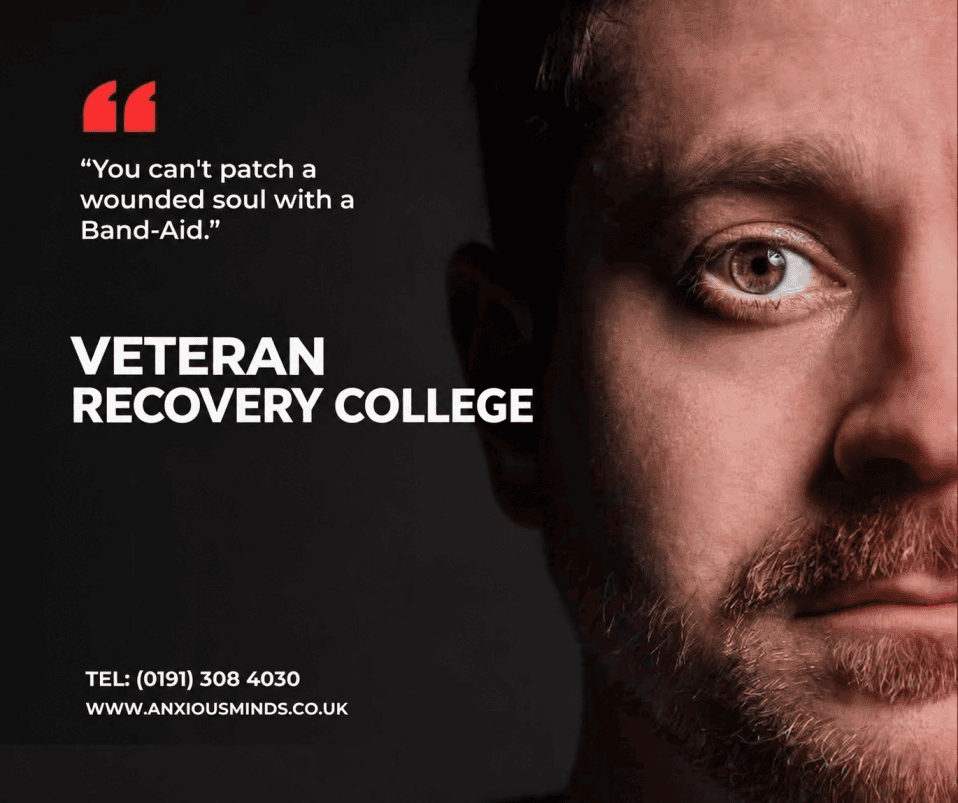
How Anxious Minds combines professional support, lived experience and practical help
Recovery colleges bring real change because they give people more than a place to talk about what is wrong. They offer a practical, welcoming route towards what could be different. For veterans and their families, that can mean rebuilding confidence, finding purpose, reconnecting with others and getting the right support at the right time.
At Anxious Minds, our Veteran Recovery College is built around that idea. It brings together mental health and healthcare professionals, veterans and family members to create support that is informed by both professional knowledge and lived experience. Everybody who works in the Recovery College is either a mental health or healthcare professional, or a veteran or family member. That shared understanding helps make the college a place where people are treated as individuals, not reduced to a diagnosis or a difficult period in their lives.
What is a recovery college?
A recovery college is a community-based service that helps people learn, connect and move towards their own recovery goals. The word “college” reflects the idea that people can develop knowledge and skills, try new things and take an active role in shaping their future. It does not mean that people need to be students in the usual sense, or that recovery follows a fixed course.
Recovery is personal. For one veteran, progress might mean being able to leave the house regularly. For another, it could mean managing anxiety, improving family relationships, finding suitable work, getting help with housing or feeling able to take part in a group. There is no single timetable and no one definition of success.
A recovery college can offer a bridge between clinical services and everyday life. People may need support while waiting for specialist help, after treatment, or alongside other care. A college can provide a steady point of contact where practical needs, emotional wellbeing and social connection are considered together.
Why veterans may need a different kind of support
Leaving the armed forces or adjusting to life after service can involve significant change. Some veterans carry the effects of trauma, injury, bereavement or experiences that are difficult to explain to people who have not served. Others may face depression, anxiety, post-traumatic stress, isolation, financial pressure, relationship strain or uncertainty about what comes next.
There is no single veteran experience. People served in different roles and circumstances. Some are ready to seek help; others may worry about being judged or asked to repeat painful experiences. Family members can also be affected.
A veteran recovery college can make support easier to approach. It offers the chance to begin with a conversation, an activity or a practical question, rather than feeling that someone must arrive with everything clearly explained. It also recognises strengths people already have: experience, skills, commitment, humour, resourcefulness and the ability to support others.
Professional care and lived experience working together
At Anxious Minds, professional expertise and lived experience are both central to the Veteran Recovery College. The team includes people with mental health or healthcare backgrounds, as well as veterans and family members. This means the support is shaped by clinical understanding and by a direct appreciation of the realities veterans and families may face.
That combination matters. A trained professional can help someone explore emotional distress safely, understand their options and identify when more specialist help is needed. A veteran or family member may bring a different kind of recognition: an understanding of service culture, transition, family pressures or how hard it can be to ask for help. Neither perspective replaces the other. Together, they can help a person feel heard and supported without assumptions being made about them.
Our counselling team provides support using approaches that can include person-centred counselling, cognitive behavioural therapy and psychotherapy, according to the person’s needs and the practitioner’s competence. Where a person may need a clinical assessment or specialist treatment, the college can help them connect with appropriate services. Counselling and recovery support are not substitutes for medical care; they can be part of a wider network of help.
Support for the whole person
People do not experience mental health in isolation from the rest of life. Worry about debt, housing, work, health or family relationships can make it harder to feel well. Equally, a lack of connection and purpose can deepen distress. An effective recovery college looks beyond a single appointment and helps people find support across different parts of their lives.
Anxious Minds’ Veteran Recovery College offers a range of support, including counselling, peer groups, recovery workshops, suicide prevention support, advice around benefits and housing, SMART Recovery, outdoor activities and support for families. These options give people different ways to engage. Someone may first come for a practical conversation, then decide to try counselling or a group. Another person may start with an activity and gradually build trust.
Practical advice can make an immediate difference. Help with a benefits or housing issue may reduce a source of intense stress. A referral to the right specialist service can help someone move towards care that fits their needs. Family support can help those close to a veteran understand what is happening and find ways to look after their own wellbeing too.
This joined-up approach does not promise quick solutions. It means people do not have to manage each challenge or navigate the system alone.
Connection can be part of recovery
Isolation can make it harder to recover. People may withdraw because they feel ashamed, exhausted or convinced that nobody will understand. Peer support can offer a different experience: sitting with others who have faced some of the same pressures, being accepted without having to explain every detail and recognising that it is possible to take small steps forward.
A group is not right for everyone, and taking part should be a choice. But for people who want it, a recovery college can create a safe route back into community life. Shared activities can help conversations happen naturally. Outdoor experiences, workshops and informal gatherings can build trust and confidence at a pace that feels manageable.
Nobody should have to tell their story before they are ready. The aim is to create belonging and mutual encouragement. A person who once came for support may, in time, welcome others. That contribution can restore purpose and allow people to both receive and give support.
Families are part of the picture
Veterans rarely experience challenges in isolation from those closest to them. Partners, children, parents and other relatives may be worried, under pressure or unsure how to help. They may also need support in their own right. Recognising families does not mean sharing someone’s confidential information without consent. It means understanding that wellbeing is influenced by relationships and that family members can benefit from appropriate guidance, activities and emotional support.
Anxious Minds’ Veteran Recovery College includes family support because families can play an important part in recovery while also needing space to look after themselves. When support is available to the wider family, it can help reduce isolation, improve understanding and make it easier to find practical next steps.
Progress that people can recognise
Recovery is not always a straight line. Goals and needs can change over time. Real change may be gradual: attending an appointment, asking for advice, sleeping better, joining a group, reconnecting with family or feeling able to plan for the future.
Anxious Minds uses recognised measures such as GAD-7, PHQ-9 and CORE-10 alongside attendance, feedback and individual progress conversations. These tools can help show changes in anxiety, depression and psychological distress. They are most useful when considered alongside what the person says matters to them. Numbers alone cannot describe every part of someone’s recovery, but they can help us understand whether support is making a difference and where it may need to adapt.
People’s goals should guide the process. Progress is not simply a service completing a set number of sessions. It is a person gaining options, confidence, connection or a clearer way forward that matters in their own life.
A route into support, and a place to keep moving
For some veterans, the Recovery College is an early point of contact when they are unsure what help to ask for. For others, it offers ongoing support alongside NHS or specialist services, or a place to reconnect after a more intensive period of care. That continuity can matter when formal appointments are limited or when a person needs time to rebuild trust and confidence.
Anxious Minds’ Veteran Recovery College has supported veterans and their families since 2020. Its purpose is to offer early help, sustained support and meaningful opportunities for connection and recovery. The college works with referral partners and other organisations so that people can be guided towards the service that best fits their needs.
Recovery colleges bring real change when they make support accessible, treat people as partners and combine professional care with lived understanding. At Anxious Minds, that means creating a place where veterans and families can be met with respect, find practical and emotional support, and take steps towards a life that feels more manageable and meaningful.
Recovery looks different for everyone. The first step may be small: a phone call, an appointment, a group or simply finding out what is available. What matters is that people do not have to take that step alone.
Anxious Minds Veteran Recovery College is part of the Cumbria and the Northeast NHS Recovery College Collective.It is also accredited by the Quality Network for Veterans’ Mental Health Services and accredited for the NHS Veterans Award accreditation.


Post a comment