

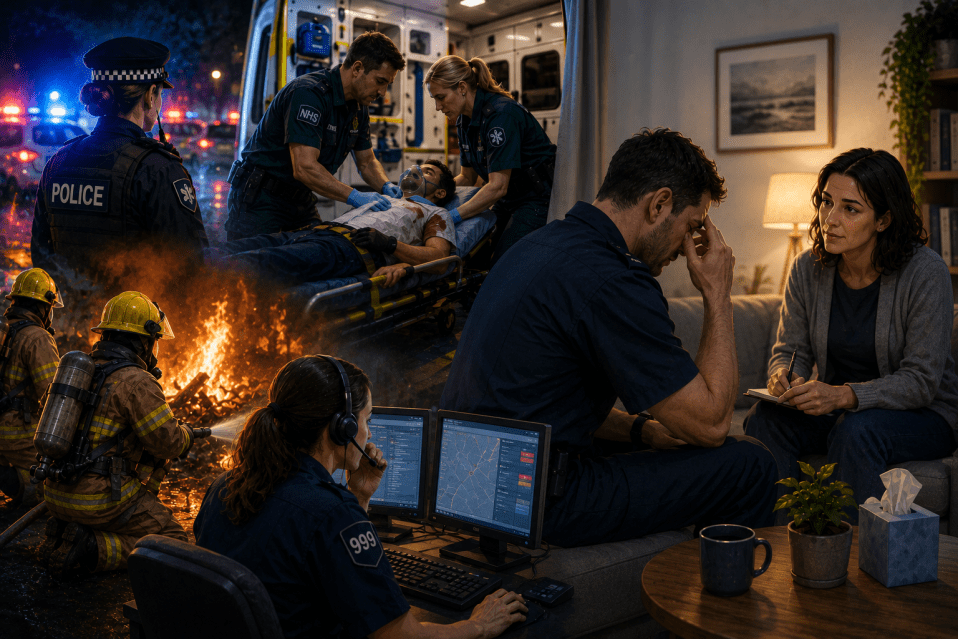
Blue light workers are there for people at some of the worst moments of their lives. Police officers, paramedics, firefighters, ambulance crews, emergency call handlers, NHS staff, search and rescue teams and other front-line responders regularly face trauma, pressure, danger, distress and life-changing incidents.
They respond when others are in crisis. They make fast decisions under pressure. They witness grief, violence, injury, death, abuse and human suffering. They often work long shifts, miss breaks, deal with staff shortages, and carry responsibility that most people never see.
But behind the uniform is a person.
Blue light workers are not immune to anxiety, depression, trauma, burnout, addiction, relationship strain, sleep problems or suicidal thoughts. In fact, repeated exposure to distressing events can put them at higher risk of mental health difficulties. Yet many still find it incredibly hard to ask for help.
One of the biggest barriers is confidentiality.
For blue light workers, support must not only be available. It must feel safe. It must feel private. It must feel separate from judgement, gossip, career worries and workplace consequences. Without confidentiality, many people will continue to suffer in silence.
Why Confidentiality Matters
Confidential support matters because people are more likely to be honest when they feel safe. If someone fears that opening up could affect their job, reputation, promotion, firearms licence, operational duties, professional registration or relationships with colleagues, they may hide what they are going through.
This is especially true in blue light services, where teamwork, trust and reliability are essential. Many workers worry about being seen as unable to cope. They may fear being treated differently, removed from duties, judged by managers, or talked about by colleagues.
Even when an organisation has good intentions, the fear can still be powerful.
A paramedic may worry that admitting to panic attacks will make people question their ability to attend emergencies. A police officer may worry that talking about trauma will affect their role. A firefighter may fear being seen as weak by the watch. A call handler may feel embarrassed that they are struggling after hearing distressing calls. An NHS worker may worry that colleagues will find out if they access support through internal systems.
Confidential support helps remove that fear. It gives people a private space where they can speak honestly before things reach breaking point.
The Culture of “Just Getting On With It”
Many blue light workers are trained to stay calm in chaos. They learn to focus on the task, control emotions and keep moving. This can be essential during emergencies. But when the incident ends, the emotional impact does not always end with it.
The culture in some services can make it difficult to show vulnerability. People may use humour to cope, avoid difficult conversations, or tell themselves that distress is “just part of the job.” They may compare themselves to colleagues and think, “Others have seen worse, so I should be fine.”
Over time, this can lead to silence.
The problem is that trauma does not disappear because it is ignored. Stress does not vanish because someone is professional. Emotional pain does not stop because a person wears a uniform.
Blue light workers often become very good at helping others while becoming very poor at asking for help themselves.
Confidential support challenges this culture by giving people permission to be human.
Fear of Career Consequences
One of the main reasons blue light workers avoid support is fear that it could affect their career. They may worry that any record of mental health difficulties could be used against them. They may fear being taken off operational duties, losing overtime, missing promotion opportunities, or being viewed as a risk.
Some may have seen colleagues treated differently after struggling. Others may simply believe that asking for help will create problems, even if that belief has never been tested.
This fear can be especially strong in roles involving public safety, weapons, driving, emergency response, safeguarding or high-pressure decision-making. Workers may feel they cannot afford to be honest.
This is why independent and confidential support can be so important. When support is clearly separate from line management and workplace performance processes, people may feel more able to speak openly.
Confidentiality does not mean ignoring risk. If someone is at immediate risk of harm, safeguarding and crisis support must come first. But for most people, confidential support gives them a chance to talk early, before difficulties become severe.
Trauma Exposure Builds Over Time
Blue light workers may be exposed to trauma repeatedly across months, years or decades. One difficult incident may stay with them. But often, it is the build-up that causes harm.
A police officer may attend domestic abuse cases, sudden deaths, suicides, assaults and child protection incidents. A paramedic may see serious injuries, medical emergencies, deaths, overdoses and distressed families. A firefighter may attend fatal fires, road traffic collisions and rescues. A call handler may stay on the phone with people during the worst moments of their lives, hearing panic, fear and grief without being physically present to help.
These experiences can build up quietly.
Someone may not notice the impact at first. They may keep functioning, keep working and keep supporting others. Then they may start having nightmares, flashbacks, irritability, emotional numbness, anger, anxiety, low mood, relationship problems or sleep difficulties.
They may avoid talking about it because they believe they should be used to it by now.
But repeated exposure to trauma is not normal emotional wear and tear. It needs proper support. Confidential services allow blue light workers to process what they have seen and heard without fear of judgement.
Confidentiality Encourages Early Help
Many people do not ask for help until they reach crisis point. This is particularly true when they fear being judged or exposed. They may wait until they cannot sleep, cannot stop drinking, cannot control their anger, cannot face work, or feel unable to keep themselves safe.
Confidential support encourages earlier help-seeking. If workers know they can talk privately, they may reach out when symptoms first appear rather than waiting until everything falls apart.
Early support can make a huge difference. It can help someone understand their reactions, develop coping strategies, reduce shame, access counselling, improve sleep, protect relationships and stay well enough to continue their work safely.
Waiting until crisis is costly for everyone. It affects the individual, their family, their colleagues, their service and the people they support. Early, confidential support is not a luxury. It is prevention.
The Impact on Families
The mental health of blue light workers does not only affect the individual. It often affects families too.
Shift work, trauma exposure, exhaustion, emotional withdrawal and irritability can place pressure on relationships. Partners may notice changes but not know how to help. Children may sense stress. Family life can become shaped around unpredictable hours, tiredness and emotional distance.
Some blue light workers protect their families by not talking about what they have seen. This can be understandable, especially when incidents are distressing. But silence can also create distance. A person may come home physically present but emotionally unavailable.
Confidential support gives workers a place to process difficult experiences without placing everything on their family. It can also help them understand how work is affecting home life and how to reconnect with loved ones.
Supporting blue light workers supports families too.
Why Internal Support Is Not Always Enough
Many organisations provide staff wellbeing services, employee assistance programmes, occupational health, peer support or trauma risk management. These can be valuable. However, internal support does not always feel safe to everyone.
Some workers may worry that internal services are linked to management. Others may not trust that information will stay private. Some may know the people involved personally. In smaller teams, even attending a wellbeing appointment may feel visible.
This does not mean internal support is wrong. It means choice matters.
Blue light workers should have access to a range of options, including confidential external counselling, independent charities, peer support outside the workplace, trauma-informed therapy and crisis support. Different people will trust different routes.
The most important thing is that support feels safe enough to use.
Peer Support and Confidentiality
Peer support can be powerful for blue light workers because it offers understanding from people who know the culture and pressures of the job. Speaking to someone who “gets it” can reduce shame and isolation.
However, peer support also needs clear boundaries. Workers must know what is confidential, what is not, and when information may need to be shared for safety reasons. Without clarity, trust can be damaged.
Good peer support does not replace professional counselling or therapy, but it can be an important bridge. It can help someone take the first step, feel less alone and recognise that they deserve help.
A trusted peer may be the person who says, “You don’t seem yourself. You don’t have to carry this alone.”
Confidential Support Reduces Stigma
Stigma remains one of the biggest barriers to mental health support in blue light services. Many workers still fear being labelled weak, unreliable, dramatic or unfit for duty.
Confidential support helps reduce stigma by normalising help-seeking. When people know that support is private, professional and accepted, they are more likely to use it. Over time, this can help shift workplace culture.
The message needs to be clear: asking for help is not weakness. It is responsible. It protects the worker, their colleagues, their family and the public.
A worker who seeks support early is not failing. They are taking steps to stay well.
What Confidential Support Should Look Like
Confidential support for blue light workers should be easy to access, clearly explained and trusted. People should know who provides it, how to contact them, what information is kept private, and what the limits of confidentiality are.
It should be available quickly, because waiting lists can discourage people from reaching out. It should be flexible around shifts. It should include options for face-to-face, telephone or online support. It should be trauma-informed and delivered by people who understand the unique pressures of emergency service work.
Support should also recognise that mental health is connected to wider life pressures. Someone may need help with trauma, but also debt, relationships, addiction, housing, sleep, grief or family stress. Good support sees the whole person, not just the uniform.
The Role of Community Charities
Community charities can play an important role in supporting blue light workers, especially where they offer local, independent and affordable mental health support.
Some workers may feel more comfortable speaking to a charity than approaching workplace services. A local charity can provide a non-judgemental space away from the workplace, where people can talk as individuals rather than as a job title.
Charities can also offer counselling, peer support, wellbeing groups, crisis prevention, advice and signposting. They may be able to support families too, which is vital when work-related stress affects home life.
Partnerships between emergency services, NHS teams and community organisations can help create a wider safety net. No single service can meet every need, but together they can make support easier to reach.
Confidentiality Has Limits, and That Builds Trust
It is important to be honest that confidentiality has limits. If someone is at immediate risk of harming themselves or others, or if there are safeguarding concerns, support services may need to act to keep people safe.
This should not be hidden. Clear information about confidentiality actually builds trust. People need to know what stays private and when information may need to be shared.
When services explain this clearly and respectfully, workers are more likely to feel safe. They understand that confidentiality is taken seriously and that any limits are about safety, not punishment.
Leaders Must Set the Tone
Managers and leaders in blue light services have a major role in creating a culture where people feel safe to seek support. This means more than putting posters on a wall. It means how leaders speak, act and respond when someone struggles.
If a worker opens up and is dismissed, judged or treated as a problem, others will notice. If they are supported with dignity, others will notice that too.
Leaders should encourage early support, protect confidentiality, challenge stigma, model healthy behaviour and make sure staff know where to go for help. They should also recognise the signs of burnout and trauma, not just poor performance.
A compassionate workplace does not reduce standards. It strengthens them.
Final Thoughts
Blue light workers give so much to others. They respond to emergencies, protect communities, save lives, comfort families and face situations most people never have to witness. But they are human beings, not machines.
They deserve support that is confidential, trusted, accessible and free from judgement.
Confidential support matters because it helps people speak honestly. It reduces fear, shame and stigma. It encourages early intervention. It protects workers, families, teams and communities. It gives people a safe place to process what they carry.
No one should have to wait until they break before they are allowed to ask for help. No one should feel that wearing a uniform means hiding pain. No one should fear that seeking support will end their career.
The people who respond when others are in crisis must know that support is there for them too.
Confidential help can be the difference between silence and recovery, between isolation and connection, between coping alone and finally being heard.


Post a comment