
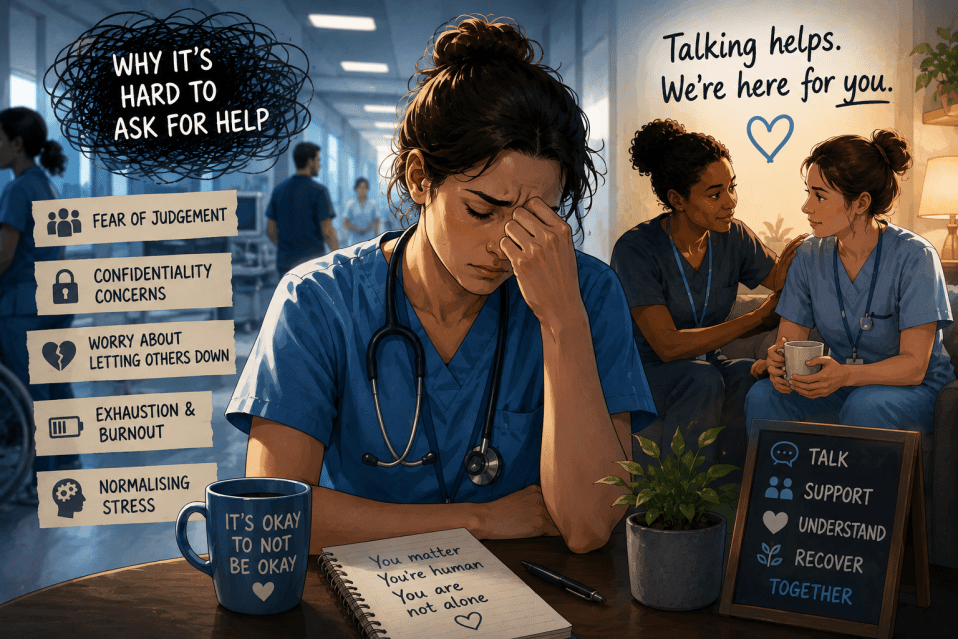
NHS staff spend their working lives helping other people. They care for patients, comfort families, respond to emergencies, make difficult decisions and carry responsibility that many people never see. They work through pressure, trauma, grief, long shifts, staff shortages and public expectation. They are often expected to stay calm, professional and compassionate, even when they are exhausted themselves.
But the people who care for others also need care.
Many NHS staff struggle with stress, burnout, anxiety, depression, trauma and emotional exhaustion. Yet despite working in healthcare, many find it incredibly difficult to ask for help. This can seem surprising from the outside. Surely people who understand health services would find it easier to access support? In reality, the opposite is often true.
NHS staff may know how the system works, but they are also aware of the pressures within it. They may worry about confidentiality, professional judgement, letting colleagues down, being seen as weak, or adding pressure to already stretched services. They may also be so used to looking after others that they do not recognise when they need support themselves.
The result is that many NHS workers suffer in silence until they reach crisis point.
The Pressure to Be Strong
NHS staff are often seen as resilient, capable and strong. During the COVID-19 pandemic, health workers were described as heroes. While this recognition came from a place of gratitude, the “hero” label can also create pressure. If someone is expected to be heroic, it becomes harder to admit they are struggling.
NHS Employers has specifically identified the need to recognise the pressure of maintaining a “hero identity” when addressing burnout in the NHS. It also highlights the importance of overcoming stigma around mental health conversations at work and shifting towards prevention and early intervention.
For many staff, the pressure to be strong starts early in training. Nurses, doctors, healthcare assistants, paramedics, midwives, porters, reception staff, cleaners, mental health workers and admin teams all learn to keep going because patients need them. They learn to put their own emotions aside to focus on the person in front of them.
This ability to carry on can be essential in the moment. But over time, always being strong can become harmful. When staff repeatedly ignore their own needs, stress builds. Emotions get pushed down. Exhaustion becomes normal. Eventually, the person may feel numb, anxious, depressed or burnt out.
Asking for help can then feel like breaking an unwritten rule: “I should be able to cope.”
Fear of Being Judged
One of the biggest reasons NHS staff do not ask for help is fear of judgement. They may worry that colleagues will see them differently. They may fear being viewed as unreliable, unstable or unable to do their job.
This fear can be especially strong in clinical roles where responsibility is high. A doctor, nurse, paramedic or mental health professional may worry that admitting to anxiety, depression, trauma or addiction could affect how others view their competence. Even when support should be confidential and compassionate, fear can still stop people speaking up.
There can also be a culture of comparison. Staff may think, “Everyone else is coping, so why am I struggling?” But often, many people are struggling quietly at the same time. The NHS Staff Survey 2025 found that 42.3% of staff reported work-related stress, and nearly one in three described themselves as burnt out.
These figures matter because they show that stress and burnout are not rare personal failures. They are widespread workforce issues. When so many staff are affected, the problem is not individual weakness. It is a sign that people working in caring roles need more support, safer cultures and earlier intervention.
Confidentiality Concerns
Confidentiality is another major barrier. NHS staff may be reluctant to seek help locally because they worry they will know the people providing the care. They may fear being seen in a waiting room, recognised by a colleague, or discussed informally.
This is a particular issue in smaller communities, specialist teams or senior roles. Someone may work alongside the very people they would need to approach for support. They may worry that their manager, colleagues or professional network could find out.
NHS England recognises this issue through NHS Practitioner Health, which is designed for healthcare staff who cannot access care or treatment locally for confidentiality reasons. It allows eligible staff to self-refer where there is a genuine reason they cannot access care confidentially, such as seniority or working within the relevant team.
The existence of such services shows how real confidentiality concerns are. NHS staff need to know that support is safe, private and separate from judgement about their professional ability. Without that reassurance, many will continue to hide their struggles.
Worry About Letting the Team Down
NHS staff often work in teams under huge pressure. When services are understaffed, every absence is felt. Many staff know that if they take time off, someone else may have to cover their shift, stay late, miss a break or work under even more pressure.
This can create guilt. A person may be unwell but still come to work because they do not want to let patients or colleagues down. They may ignore signs of burnout because they feel there is no space to stop. They may think, “My team needs me,” even when they are close to breaking point.
This sense of duty is admirable, but it can also be dangerous. When staff feel unable to rest, seek help or admit they are struggling, problems become more severe. Stress can turn into burnout. Burnout can lead to sickness absence, mistakes, emotional detachment or people leaving the profession altogether.
Caring for staff is not separate from caring for patients. A supported workforce is safer, healthier and more sustainable.
Burnout Can Feel Normal
Another reason NHS staff struggle to ask for help is that burnout can become normalised. When everyone is tired, everyone is under pressure and everyone is working beyond capacity, it can be hard to recognise that something is wrong.
Burnout is more than being tired after a difficult shift. It can involve emotional exhaustion, cynicism, reduced compassion, feeling detached, loss of motivation, irritability, poor sleep, dread before work and a sense that nothing is ever enough.
NHS Employers reported that the 2025 NHS Staff Survey showed a rise in burnout and recommended practical steps such as upskilling managers, encouraging compassionate leadership and building a culture of prevention and early intervention.
This is important because burnout should not be treated as a private problem for individuals to manage alone. It is often linked to workload, staffing, workplace culture, moral distress and repeated exposure to pressure. Staff need support, but organisations also need to reduce the causes of harm.
Exposure to Trauma
Many NHS staff are regularly exposed to trauma. This may include sudden death, serious injury, abuse, safeguarding concerns, suicide, violence, distressed families, child protection cases, medical emergencies and end-of-life care.
Some staff witness traumatic events repeatedly over many years. Others may experience one incident that stays with them. Even when trauma is part of the job, it still affects the person. Professional training does not make someone immune to human pain.
Trauma can show up in different ways. Staff may experience intrusive memories, nightmares, irritability, emotional numbness, panic, guilt, anger or avoidance. They may find themselves replaying incidents or questioning whether they did enough.
But NHS staff may minimise their own trauma because they compare themselves to patients. They may think, “I wasn’t the one injured,” or “The family has it worse,” or “This is just part of the job.” This can stop them recognising that they also need support.
Being exposed to other people’s suffering can leave a mark. Staff deserve space to process that safely.
Moral Injury and Impossible Choices
Some NHS staff experience moral injury. This happens when people feel they cannot provide the care they believe patients deserve because of circumstances outside their control. This may include staff shortages, lack of beds, long waiting lists, limited resources, overcrowding, delays or pressure to discharge.
Moral injury can be deeply painful because it conflicts with why many staff joined the NHS in the first place. They want to help, heal and care. When the system prevents them from doing that fully, they may feel guilt, anger, helplessness or shame.
This type of distress can be difficult to talk about. Staff may worry they will be seen as complaining. They may fear criticism or feel powerless to change anything. Over time, moral injury can contribute to burnout, anxiety, depression and loss of purpose.
Support must recognise that NHS staff are not only affected by workload. They are affected by the emotional cost of caring in a system under pressure.
The Stigma Around Mental Health
Despite improvements in public conversations about mental health, stigma still exists. It can be especially complicated for healthcare workers. NHS staff may encourage patients to seek help but struggle to apply the same compassion to themselves.
They may think they should “know better.” They may feel embarrassed because they work in health. They may worry that needing help makes them less professional. They may feel ashamed that they can support others but cannot manage their own distress.
This double standard is common. People who care for others are often hardest on themselves.
Mental health problems do not discriminate. Being a nurse, doctor, paramedic, therapist, healthcare assistant, cleaner, receptionist, porter or manager does not make someone immune to anxiety, depression, trauma or burnout. NHS staff are human beings first.
Lack of Time and Energy
Even when NHS staff want help, they may not have the time or energy to access it. Long shifts, rotating patterns, night work, commuting, childcare, caring responsibilities and exhaustion can make appointments difficult.
If support is only available during working hours, staff may struggle to attend. If the process involves long forms, waiting lists or repeated assessments, they may give up. If they are already burnt out, even making a phone call can feel too much.
This is why support for NHS staff must be simple, flexible, confidential and easy to access. Staff should not have to fight through complicated systems while already overwhelmed.
NHS England lists support available for NHS people, including wellbeing apps, self-check tools and staff mental health and wellbeing services. These resources are important, but staff also need workplace cultures that make it safe to use them.
Why Early Support Matters
NHS staff often delay asking for help until things become severe. They may wait until they cannot sleep, cannot stop crying, feel numb, dread work, become physically unwell, or feel they cannot continue.
But early support is far better than crisis support. If staff can talk when stress first becomes unmanageable, they may be able to recover sooner and avoid deeper harm. Early intervention can include counselling, peer support, reflective practice, supervision, trauma-informed debriefing, occupational health, wellbeing services or time to rest.
Managers have a key role. A supportive manager can notice changes, ask gently, reduce shame and encourage staff to access help. NHS Practitioner Health guidance suggests simple check-in phrases such as noticing someone does not seem themselves and asking how they are really doing.
Sometimes a small conversation can open the door to support before someone reaches breaking point.
What Needs to Change
If NHS staff are struggling to ask for help, the answer cannot simply be telling them to be more resilient. Many NHS workers are already incredibly resilient. The problem is often that resilience is being overused.
Services need cultures where asking for help is seen as responsible, not weak. Staff need confidential routes into support. Managers need training to recognise burnout, trauma and distress. Teams need time to talk after difficult incidents. Workplaces need to reduce stigma and create realistic workloads wherever possible.
Support should be available before crisis. It should be practical, accessible and trusted. It should include mental health support, peer spaces, counselling, trauma support, flexible access and clear signposting.
Most importantly, staff need to hear this message: you are not failing because you need help. You are human.
How Colleagues Can Help
Colleagues can make a real difference by noticing each other. If someone seems withdrawn, irritable, tearful, exhausted or unlike themselves, a gentle check-in can help.
You could say:
“I’ve noticed you don’t seem yourself. Do you want to talk?”
“That shift was really hard. How are you feeling after it?”
“You don’t have to pretend with me.”
“I’m worried about you. Have you got support?”
“Can I help you find someone to speak to?”
Listening without judgement matters. Avoid minimising things with phrases like “we’re all tired” or “that’s just the job.” Even if pressure is common, it does not mean it is harmless.
Final Thoughts
NHS staff often struggle to ask for help because of stigma, guilt, confidentiality fears, workload, trauma, burnout and the pressure to always be strong. Many spend their careers caring for others while quietly ignoring their own needs.
But NHS staff deserve care too.
The people who hold the hands of patients, respond to emergencies, comfort families, clean wards, manage appointments, deliver treatment, support recovery and keep services running should not have to suffer in silence.
Asking for help is not weakness. It is not failure. It is not letting the team down. It is a sign that someone has carried too much for too long and deserves support.
A healthier NHS depends on a healthier workforce. Staff wellbeing is not an optional extra. It is essential for patients, teams, families and the future of care.
The people who care for everyone else must be allowed to be cared for too.


Post a comment