
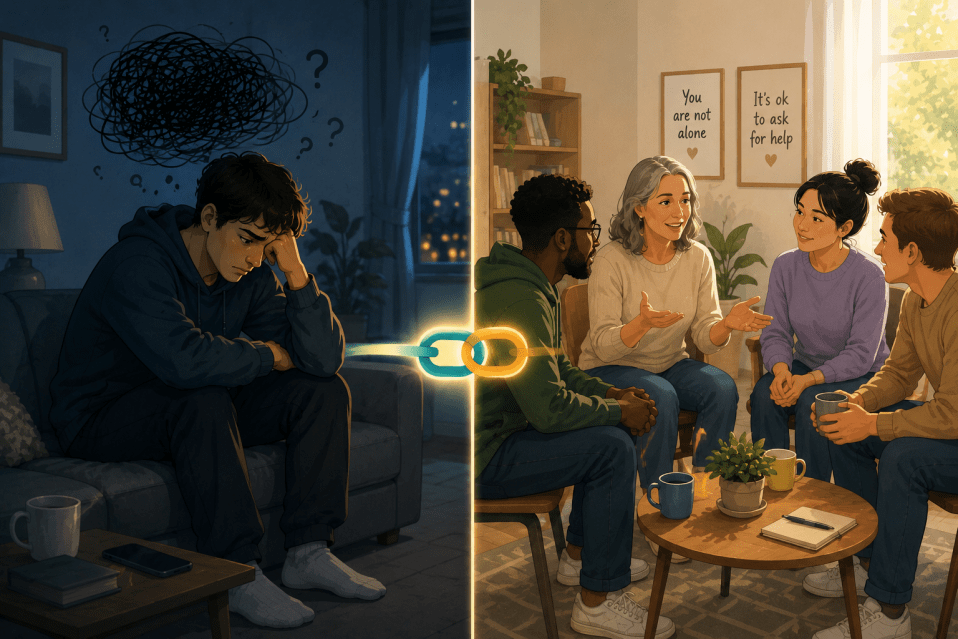
Loneliness and anxiety often go hand in hand. When someone feels alone, disconnected or unsupported, their worries can grow louder. When someone feels anxious, they may avoid social situations, cancel plans, stop replying to messages or withdraw from the people who care about them. Over time, this can create a painful cycle: loneliness makes anxiety worse, and anxiety makes loneliness harder to escape.
Many people think loneliness simply means being physically alone, but it is more complicated than that. A person can be surrounded by people and still feel lonely. They may have family, colleagues, friends or neighbours around them, but still feel unseen, misunderstood or emotionally distant. Mind explains that someone can have social contact and support and still feel lonely, especially if they do not feel understood or cared for by those around them.
Anxiety can work in a similar way. Someone may look calm on the outside but feel overwhelmed inside. They may want connection but fear judgement. They may want to join in but feel too nervous. They may want to talk but not know how to explain what they are feeling.
Understanding the connection between loneliness and anxiety is important because both can seriously affect mental health, confidence, relationships and quality of life. The good news is that both can improve with the right support, small steps and safe connection.
What Is Loneliness?
Loneliness is the painful feeling of not having the connection, support or closeness we need. It is not the same as choosing to spend time alone. Some people enjoy solitude and feel peaceful in their own company. Loneliness is different because it feels unwanted. It can feel empty, heavy and isolating.
Loneliness can happen for many reasons. It may follow bereavement, relationship breakdown, moving to a new area, retirement, unemployment, illness, trauma, caring responsibilities, bullying, financial hardship or family conflict. It can also happen when someone has people around them but does not feel emotionally safe or understood.
The NHS says loneliness can affect anyone at any time in life, and understanding our own reasons for feeling lonely can help us identify and manage those feelings.
Loneliness is not a personal failure. It is a human signal. It tells us that something important is missing: connection, belonging, understanding or support.
What Is Anxiety?
Anxiety is a feeling of worry, fear or unease. It is a normal human response to stress or danger, but it becomes a problem when it is intense, long-lasting or starts to affect daily life.
Anxiety can affect the mind and body. Someone may experience racing thoughts, panic, overthinking, restlessness, irritability, difficulty sleeping, muscle tension, a racing heart, stomach problems or shortness of breath. They may avoid places, people or situations that make them anxious.
Anxiety often asks, “What if?” What if I embarrass myself? What if people judge me? What if I say the wrong thing? What if I cannot cope? What if something bad happens?
When anxiety is linked to social situations, it can make connection feel risky. A person may want friendship, support and community, but their anxiety tells them to stay away to avoid discomfort. This can lead to isolation, which then makes the anxiety worse.
How Loneliness Can Increase Anxiety
Loneliness can make anxiety worse because the mind has more space to worry. When someone is isolated, they may spend more time alone with their thoughts. Without regular connection, reassurance or routine, worries can grow.
A person may start overthinking small interactions. They may wonder why someone did not reply. They may assume they have upset people. They may feel unwanted or forgotten. The less contact they have, the more uncertain social situations can feel.
Loneliness can also reduce confidence. If someone has not socialised for a while, meeting people again can feel intimidating. They may worry that they have lost social skills or that others will notice they are anxious. This can make them avoid connection, even though connection is what they need.
Loneliness can also make people feel unsafe. Human beings are built for connection. When we feel cut off from others, our nervous system can become more alert to threat. This can make everyday stress feel bigger and harder to manage.
How Anxiety Can Lead to Loneliness
Anxiety can lead to loneliness by making people withdraw. This can happen slowly. A person might cancel one plan because they feel nervous. Then they avoid another. They stop answering calls. They tell themselves they will go next time. Eventually, social contact becomes less frequent, and isolation grows.
Anxiety can also make people hide how they feel. Someone may worry that others will not understand, so they pretend everything is fine. They may smile in public but feel exhausted afterwards. They may avoid honest conversations because vulnerability feels too risky.
Social anxiety can be especially isolating. A person may fear being judged, embarrassed, rejected or watched. Even simple interactions, such as making a phone call, attending a group, speaking in a meeting or walking into a café, can feel overwhelming.
The problem is that avoidance only helps in the short term. It reduces anxiety for a moment, but it teaches the brain that the situation was dangerous. Over time, the world can become smaller, and loneliness can become stronger.
The Cycle of Loneliness and Anxiety
Loneliness and anxiety can create a cycle that is hard to break.
A person feels lonely, so they want connection. But the thought of reaching out makes them anxious. They avoid contacting people, which reduces anxiety temporarily. But later, they feel more lonely. That loneliness makes them feel more unwanted or disconnected. Then anxiety becomes stronger the next time they consider reaching out.
The cycle may look like this:
Feeling lonely
Wanting connection
Feeling anxious about reaching out
Avoiding people or plans
Feeling temporary relief
Becoming more isolated
Feeling more lonely
Feeling more anxious next time
This cycle can happen to anyone. It is not a sign of weakness. It is a sign that fear and disconnection have started feeding each other.
The first step to breaking the cycle is noticing it without judging yourself.
Loneliness Can Affect Physical and Mental Health
Loneliness is not just an uncomfortable feeling. It can affect overall wellbeing. The Mental Health Foundation highlights that our connection to other people and our community is fundamental to protecting mental health.
Research has also found links between loneliness and mental health difficulties. One study of young adults in Britain found that lonelier young adults were more likely to experience mental health problems and use more negative strategies to cope with stress.
The relationship between loneliness and mental health can work both ways. The Health Foundation describes the relationship as bi-directional: loneliness can contribute to mental health conditions, and mental health conditions can contribute to loneliness.
This matters because people who feel lonely should not be dismissed as simply needing to “get out more.” Loneliness can be painful, complex and deeply connected to mental health.
Why People May Feel Lonely Even Around Others
Many people feel ashamed because they are lonely despite having people in their lives. They may think, “I have no right to feel lonely,” or “Other people would not understand.” But loneliness is about the quality of connection, not just the number of people nearby.
Someone may feel lonely in a relationship if they cannot talk honestly. They may feel lonely in a family if emotions are dismissed. They may feel lonely at work if they feel invisible. They may feel lonely in a crowd if they feel different, anxious or unable to be themselves.
This kind of loneliness can be especially confusing because it is hidden. Others may assume the person is fine because they are not physically alone.
Feeling lonely around others does not mean you are ungrateful. It means you need deeper, safer or more meaningful connection.
Why Anxiety Makes Reaching Out Feel Hard
When someone is anxious, even a small step can feel huge. Sending a message may bring fears of rejection. Attending a group may bring fears of judgement. Talking honestly may bring fears of being misunderstood.
Anxiety often demands certainty before action. It wants to know that the conversation will go well, that the person will respond kindly, that no one will judge, and that nothing awkward will happen. But real life cannot offer complete certainty.
This is why reaching out can feel so difficult. The person may not lack motivation. They may be fighting a strong internal fear response.
A helpful approach is to make the first step as small as possible. You do not have to rebuild your whole social life at once. You might begin with one message, one short walk, one support group, one phone call, or one honest sentence.
How to Start Breaking the Cycle
Breaking the loneliness-anxiety cycle takes time. It is not about forcing yourself into overwhelming situations. It is about building safe connection gradually.
Start with one low-pressure contact. Send a simple message to someone you trust: “I’ve been a bit quiet lately, but I’d like to catch up.” Or, “I’m having a difficult week. Could we talk sometime?”
You could also choose connection that does not require intense conversation. Sitting with someone, walking together, attending a group, helping with a community activity, or being around others in a café or library can all reduce isolation.
Mind suggests taking things slowly when trying to manage loneliness, as well as trying to open up to people you know, making new connections, looking after yourself and considering talking therapies.
If anxiety is strong, plan ahead. Choose a time-limited activity. Arrange your own transport. Tell yourself you can leave if needed. Focus on showing up rather than doing it perfectly.
Build Connection Through Routine
Routine can help reduce both loneliness and anxiety. When connection becomes part of a regular routine, it can feel less intimidating.
This might include attending a weekly group, volunteering, joining a wellbeing activity, going for a regular walk, visiting a community centre, attending peer support, or booking regular counselling.
Repeated safe contact helps the nervous system learn that connection does not always lead to danger or judgement. Over time, confidence can grow.
Community spaces are especially important because they offer gentle connection. People may not be ready to talk deeply straight away, but they can still benefit from being around others, sharing a cup of tea, joining an activity or being welcomed by name.
Be Careful With Social Media
Social media can sometimes help people stay connected, but it can also make loneliness and anxiety worse. Seeing other people’s highlights can lead to comparison. A person may believe everyone else is happier, more popular or more successful.
Social media can also create a false sense of connection. Someone may scroll for hours but still feel emotionally empty afterwards. They may see many people online but have no meaningful conversation.
If social media leaves you feeling worse, try setting limits, unfollowing accounts that trigger comparison, and using your phone to create real connection instead. Send a message. Arrange a call. Join a local group. Look for support nearby.
The aim is not to remove all online contact. It is to notice whether it is helping you feel connected or making you feel more alone.
Talk About the Anxiety, Not Just the Loneliness
If anxiety is stopping you from connecting, it can help to name it. You might say to someone you trust:
“I want to meet up, but I get anxious beforehand.”
“I sometimes cancel because I panic, not because I don’t care.”
“I find groups hard, but I’m trying.”
“I might be quiet at first, but I do want to be there.”
Honesty can reduce pressure. It allows other people to understand what is happening instead of assuming you are not interested.
It can also help you feel less alone with the anxiety itself.
When to Seek Support
If loneliness and anxiety are affecting your daily life, sleep, relationships, work, confidence or ability to cope, it may be time to seek support. You do not have to wait until crisis point.
Support could include speaking to your GP, contacting a local mental health charity, joining a peer support group, accessing counselling, using NHS Talking Therapies, or speaking to someone you trust.
The NHS says support is available if you are finding it hard to cope with stress, anxiety or depression linked to loneliness.
If you feel at risk of harming yourself, feel unable to stay safe, or are in a mental health crisis, seek urgent help. NHS guidance says urgent mental health help is available, and emergency support should be used if you or someone else is in immediate danger.
How Friends and Family Can Help
If someone you care about seems lonely and anxious, try to respond with patience. Avoid saying, “You just need to get out more,” or “Why don’t you make more effort?” These comments can increase shame.
Instead, offer gentle, specific invitations:
“Would you like to come for a short walk?”
“I can come round for a cup of tea.”
“No pressure to talk, but I’m here.”
“Would it help if I came with you to the group?”
“I’ve noticed you’ve been quiet. I care about you.”
Consistency matters. A lonely and anxious person may not respond straight away. They may cancel. They may seem unsure. Keep the door open without making them feel guilty.
Final Thoughts
Loneliness and anxiety are closely linked. Loneliness can make worries louder, reduce confidence and increase feelings of threat. Anxiety can make people withdraw, avoid connection and become more isolated. Together, they can create a painful cycle.
But that cycle can be broken.
The first step does not have to be big. It might be one message, one conversation, one group, one appointment, one walk, or one honest admission: “I feel lonely, and I’m anxious about reaching out.”
Connection is a basic human need. You are not weak for needing people. You are not a burden for asking for support. You are not strange for feeling lonely, even when others think you should be okay.
With patience, support and small steps, it is possible to feel less alone and less afraid. You do not have to face loneliness or anxiety by yourself.


Post a comment